

If you are comparing SOS Wellness and LifeStance Health, start with the care you need and the clinicians available to provide it. This guide is published by SOS Wellness, one of the providers discussed, and is an unranked decision guide—not an independent rating.
At a glance
- SOS Wellness offers Ohio mental health care and addiction treatment, with suitability determined through assessment.
- Confirm LifeStance Health’s current services and locations directly with the practice you are considering.
- Ask each practice about clinician fit, insurance coverage, appointment availability and follow-up arrangements.
- Organization size and service lists alone do not establish better care.
Why this matters
A provider can offer the right service without having the right clinician for you. Therapy, psychiatric assessment, medication management, and addiction treatment address different needs, and an appointment labeled mental health care does not tell you which service you will receive.
For your decision, separate two questions: does the organization offer the care you need, and does the specific clinician treat your age group and concern? The second question decides clinical fit. A larger network does not establish better outcomes, and a local focus does not establish faster access.
You also need a workable follow-up plan. Ask who handles medication questions, how therapy and prescribing connect, and what happens when symptoms worsen between appointments. These details matter more than choosing the better-known name.
Care options compared
| Dimension | SOS Wellness | LifeStance Health |
|---|---|---|
| Locations | Offices in Middletown and Cincinnati (Norwood) | Multistate network with Ohio locations; confirm the relevant office |
| Therapy and psychiatry | Therapy, psychiatry and medication management | Therapy, psychiatry and medication management |
| Children and families | Child, adolescent, adult and family services; confirm service-specific eligibility | Child and adult care; confirm age eligibility and family services with the clinician |
| Telehealth | Patients must be physically in Ohio during visits | Virtual care; confirm patient-location requirements and clinician authorization |
| Addiction services | Addiction treatment, medication-assisted treatment and adult intensive outpatient options | Specialty and addiction services; confirm local treatment scope and eligibility |
| Care coordination | Ask how therapy, prescribing and addiction services connect | Ask how therapy, prescribing and addiction services connect |
| Insurance and costs | Accepts Ohio Medicaid, including managed plans; verify exact-plan coverage, clinician network, authorization and costs | Verify exact-plan coverage, clinician network, authorization and costs |
The table compares service scope, not treatment results. LifeStance Health’s public service descriptions cover therapy, psychiatry, online care, and care for children and adults; its corporate descriptions identify a multistate outpatient network. Use those organization-level facts to narrow your search, then confirm the details that apply to your appointment.
Questions about SOS Wellness services in Ohio
SOS Wellness offers psychiatry, therapy, medication management and addiction recovery services, with Ohio telehealth options. It serves children, teens and adults, but age eligibility and suitability vary by service and clinician.
That scope gives you a clear starting point when your household has more than one kind of care need. A parent seeking help for a child and an adult seeking medication management can begin with an organization that explicitly serves both age groups. That does not mean the same clinician treats everyone.
The limitation is geographic scope. An Ohio-focused service description does not establish access in another state, and a list of services does not establish that every service is offered by every clinician.
Before booking, ask:
- Does the clinician treat your age group and primary concern?
- Is the appointment for therapy, psychiatric assessment, or medication follow-up?
- Can the practice address co-occurring mental health and substance-use concerns?
- If you need a different service, how does the referral happen?
Questions about LifeStance Health locations
If you are considering LifeStance Health for care in more than one state, verify its current locations, clinician services and intake arrangements in each state. A network’s geographic reach alone does not establish clinical suitability or continuity of care.
This matters if you are comparing locations or helping family members search in different states. You can begin with one organization’s clinician search, but you still need to evaluate each person’s care separately.
The limitation is that network breadth does not make clinicians interchangeable. Specialties, age groups, insurance participation, and appointment arrangements require individual confirmation. A network name is not a promise that one clinician can meet every need.
For a relocation decision, ask about continuity before assuming you can keep the same clinician. Telehealth care depends on where you are physically located and whether the clinician is authorized to treat you there. A multistate organization does not remove that requirement.
Both offer therapy and medication care
Both providers offer therapy and psychiatric services. The useful comparison is whether the clinician’s treatment approach matches your symptoms, goals and preferences—not simply whether a service appears on the organization’s website.
Therapy generally focuses on patterns in thoughts, emotions, behavior and relationships. Medication management involves clinical assessment of whether medication fits your treatment plan and monitoring its effects. These services can work together, but a therapy appointment does not necessarily include prescribing, and no visit guarantees a prescription.
Ask what the first appointment is intended to accomplish. If you want diagnostic clarification, say so. If you already take medication and need follow-up, explain that before booking rather than assuming every psychiatric appointment serves the same purpose.
For either provider, bring:
- Your main concerns and how they affect daily life.
- Current medications, supplements, allergies, and prior side effects.
- Relevant treatment history and what helped or did not help.
- Your goals for care, including preferences about medication.
The advantage on both sides is access to more than one type of mental health service. The limitation is that organization-level offerings do not tell you who will provide each part of your treatment.
Both serve children; clinician fit matters
Both organizations offer care for children and adults. For a family, the deciding question is not whether the website mentions children. It is whether the clinician treats your child’s age group and the concerns prompting the appointment.
A child struggling with attention, anxiety, sleep, or behavior needs an assessment that considers the broader picture. Similar difficulties can have different causes, so booking around a suspected diagnosis should not replace a clinical evaluation.
Ask how caregivers participate, how the clinician gathers information about home and school, and how privacy works for an adolescent. Also clarify whether you are arranging individual treatment, parent guidance, or family therapy; those are not interchangeable services.
Ask the clinician to explain the assessment process and your family’s role. If attention concerns prompted your search, prepare examples from more than one setting rather than bringing only a diagnostic label.
Both offer telehealth; location and suitability decide
Both organizations offer remote mental health appointments. Telehealth can remove the trip to an office, but it does not remove the need for an appropriate assessment, a private setting, or a safety plan.
For SOS Wellness telehealth, you must be physically in Ohio during the visit. For LifeStance, confirm the permitted patient location and whether the clinician is authorized to provide care there. Tell either practice about travel or an upcoming move, and ask whether your concern can be assessed remotely or needs an in-person component.
Telehealth’s practical advantage is receiving care without attending an office visit. Its limitation is that your environment becomes part of the appointment: interruptions, privacy concerns, and connection problems can interfere with the conversation.
Ask either provider how it handles a dropped connection, urgent symptoms during a visit and recommended in-person follow-up. Compare these arrangements with your clinical needs, privacy and ability to connect reliably.
Compare addiction treatment services and levels of care
SOS Wellness offers addiction recovery services, care for co-occurring mental health and substance-use concerns, and intensive outpatient options for adults 18 and older. An assessment determines the recommended services and level of care; a service listing does not establish enrollment or availability.
Ask each practice which substance-use concerns it treats and how it arranges referrals when a different level of care is needed. Do not assume that an outpatient service includes medical detoxification or residential treatment.
For LifeStance Health, ask the individual practice whether the clinician treats your substance-use concern and how referrals work when another level of care is needed. A general psychiatry or therapy listing does not answer those questions.
If substance use and mental health symptoms overlap, disclose both. Choose care that addresses the full problem, rather than separating concerns simply because different appointment categories exist. Severe withdrawal symptoms or an immediate medical danger require urgent medical assessment, not a routine booking.
Care coordination: confirm the handoffs
Offering several services does not prove those services share a treatment plan. For either organization, ask how your therapist and prescriber communicate, what consent is required, and who takes responsibility for follow-up.
Use this short booking checklist:
- Clinical fit: Confirm the clinician’s age groups, concerns treated, and appointment purpose.
- Coverage check: Verify the clinician, location, and service with your insurer and the practice.
- Follow-up plan: Identify who handles questions, referrals, medication concerns, and worsening symptoms.
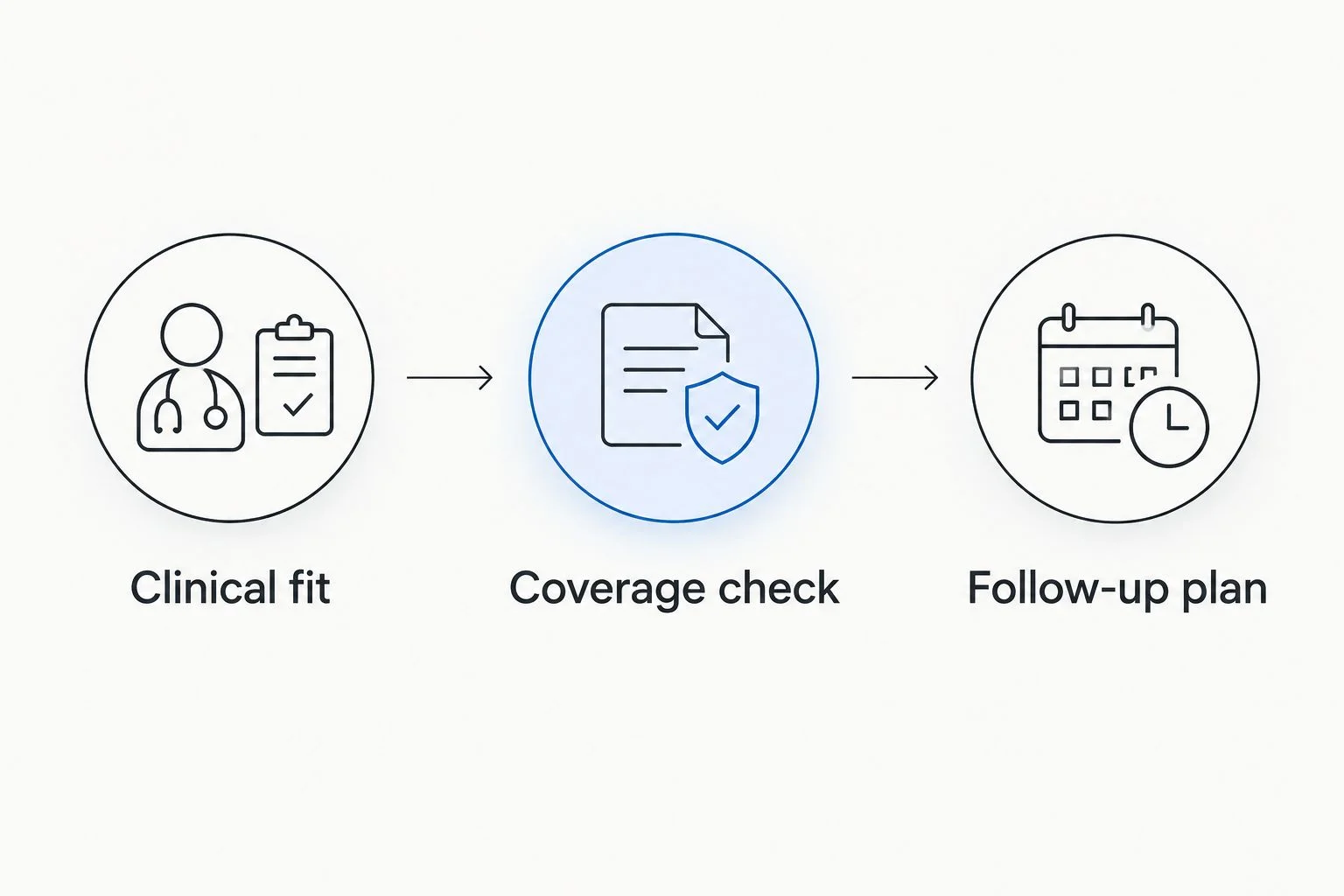
Confirm the clinician and follow-up arrangements before committing to a provider.
Write the answers in a 1-page appointment summary you can reuse when comparing practices. This keeps your decision tied to your needs rather than to a reassuring description of the organization.
The benefit of either provider is the possibility of arranging related outpatient services within one organization. The limitation is that you must confirm the actual handoffs. A clear explanation of coordination beats an assumption that it happens automatically.
Pricing: compare billing arrangements, not brand names
For a billing decision, compare how each practice handles insurance and self-pay for your specific appointment. Verify coverage with both the practice and your insurer; an organization-level insurance statement is not confirmation for every clinician or service.
Insurance billing depends on your plan’s rules and the appointment involved. Self-pay arrangements require a direct explanation from the practice. Do not assume either route is simpler until you understand the billing process and your responsibilities.
Ask both providers the same questions:
- Is this specific clinician in-network for my exact plan?
- Are therapy and medication appointments billed separately?
- Does the service require authorization or a referral?
- How are follow-up appointments and billing questions handled?
- What information will I receive before agreeing to care?
There is no supported pricing winner here. Choose the arrangement you can understand and sustain, alongside the clinical fit—not instead of it.
Making your choice: compare services and individual fit
Questions to bring to SOS Wellness
Ask SOS Wellness which clinician and services fit your concerns, whether office-based or Ohio telehealth care is appropriate, and how therapy, medication management and addiction treatment would connect if you need more than one service.
Before committing, verify the clinician, service, coverage, and coordination arrangements. The stated service range is a reason to inquire, not a guarantee that one treatment plan includes everything.
Questions to bring to LifeStance Health
Ask LifeStance which Ohio clinicians offer the therapy, psychiatric or addiction services you need and how they coordinate care. If you are also comparing locations outside Ohio, ask about intake and continuity arrangements in each location.
Confirm the details at the clinician level. Network scope does not guarantee continuity after a move, specialty fit, or authorization to provide telehealth wherever you travel.
| Decision factor | What to verify with each practice |
|---|---|
| Location | Office location and where you must be physically located for telehealth |
| Therapy and medication care | Clinician fit, appointment purpose and prescribing assessment |
| Children and families | Age eligibility, caregiver involvement and service fit |
| Telehealth | Clinical suitability, privacy and emergency arrangements |
| Addiction treatment | Conditions treated, services available and appropriate level of care |
| Care coordination | Communication, consent and responsibility for follow-up |
| Pricing and billing | Exact-plan network participation, benefits, authorizations and fees |
FAQ
Is SOS Wellness better than LifeStance Health?
Neither provider is established as better overall. Both offer overlapping mental health and addiction services. Compare the specific clinician’s experience with your concerns, service eligibility, location, insurance coverage, costs and follow-up arrangements.
Do both providers offer therapy and medication management?
Yes, both offer therapy and psychiatric care, including medication management. Confirm which service you are booking and whether separate clinicians will provide therapy and prescribing.
Which provider should I choose for my child?
Choose the clinician who treats your child’s age group and presenting concerns. Both organizations offer care for children, but you should ask how caregivers participate and how assessment information is gathered.
Can I use telehealth if I travel outside Ohio?
SOS Wellness telehealth patients must be physically in Ohio during visits, so do not plan an SOS visit while outside the state. For LifeStance, tell the practice where you will be and confirm its location requirements and the clinician’s authority to treat you there before arranging the visit.
Which provider should I contact about addiction treatment?
Both SOS Wellness and LifeStance list addiction services. Ask the specific practice which substance-use concerns it treats, which services are available and whether an assessment indicates that its level of care fits your needs.
How do I check whether my insurance covers an appointment?
Verify the specific clinician, service, and location with both your insurer and the practice. Ask about authorization, referrals, and whether therapy and psychiatric appointments have different billing arrangements.
What should I do if I need mental health help right now?
Call 911 for immediate danger or a medical emergency. In the United States, call or text 988 for crisis support, available 24 hours per day, 7 days per week; do not wait for a routine outpatient appointment.
One last thing
A multistate network does not automatically let you take the same telehealth appointment across state lines. For a move or extended trip, ask about your physical location before the visit—not after you have arranged follow-up.
The most useful final question is simple: Who do I contact if the treatment plan is not working? A clear answer tells you how care continues after the first appointment, which is more useful than choosing on organizational size alone.
Further reading
Related reading
This article provides general educational information and does not replace an individual clinical assessment. Contact your healthcare provider about your own care.