

Medication-assisted treatment costs in Ohio depend on your medication, treatment setting, insurance benefits, and the services billed alongside prescribing; there is no single statewide patient price. Your medication bill can exclude appointments, counseling, laboratory testing, and administration fees, so ask for a written estimate of the full treatment plan before you begin.
At a glance
- Compare the full cost of medication-assisted treatment, not just the prescription.
- Methadone, buprenorphine, and naltrexone have different treatment requirements that affect billing.
- Ask your insurer about medication coverage, provider networks, prior authorization, and separate service charges.
- SOS Wellness provides outpatient addiction and mental health services in Ohio; confirm the treatment and coverage you need.
Why this matters
A covered prescription does not mean every part of addiction treatment is covered. You need to know which services your clinician recommends, who bills for them, and what your insurance requires before those services start.
Compare complete treatment plans, not isolated medication charges. A pharmacy estimate and a clinic estimate can describe different parts of the same care.
SOS Wellness is an Ohio option for people seeking outpatient addiction and mental health care. Ask whether the specific medication, appointment format, and level of support you need are offered before comparing insurance benefits.
How much does medication-assisted treatment cost in Ohio?
Your out-of-pocket cost is the amount you owe after your insurance applies its coverage rules. For a self-pay patient, it is the amount charged for the agreed services, including anything billed separately.
Request a written estimate for a clearly defined period that includes your initial evaluation and expected follow-up services. Ask for a separate estimate of ongoing care, because the first visit and later visits do not necessarily involve the same services. The estimate period is for comparing charges, not a recommended treatment length.
| Part of treatment | What to ask about | What the answer tells you |
|---|---|---|
| Initial evaluation | Is the assessment billed separately from prescribing? | Whether starting treatment creates an additional appointment charge |
| Medication | Is the prescription covered under pharmacy or medical benefits? | Which coverage rules and billing process apply |
| Follow-up visits | How often are visits recommended, and who bills them? | The appointment component of your ongoing expenses |
| Counseling | Is it included, separately billed, or provided elsewhere? | Whether therapy adds another bill |
| Laboratory testing | Which tests are planned, and which laboratory processes them? | Whether a separate laboratory claim is expected |
| Medication administration | Does the medication require an office visit or administration service? | Whether receiving the medication creates another charge |
Ask for 2 separate estimates: starting treatment and continuing treatment. This prevents you from treating a first-visit quote as a reliable picture of every later month.
An estimate is not a guarantee of an insurance claim outcome. Keep the written estimate and your insurer's explanation together so you can check whether both describe the same services.
How do medication options change the bill?
For opioid use disorder, the FDA-approved medications are methadone, buprenorphine, and naltrexone. These are not interchangeable choices based only on expense: your medical history, current opioid use, preferences, and treatment setting affect which option is appropriate.
The comparison below describes clinical and billing differences, not a ranking. SAMHSA's guidance on medications for opioid use disorder explains these treatment approaches; your prescribing clinician must determine which fits your situation.
| Medication | Best for discussion when | Main benefit | Important limitation | Billing question |
|---|---|---|---|---|
| Buprenorphine | You want to discuss office-based treatment for opioid use disorder | Can support treatment outside a dedicated opioid treatment program | Starting treatment requires clinical instructions to avoid precipitated withdrawal | Are the prescribed formulation, visits, and any administration services covered? |
| Methadone | You need an assessment for structured opioid treatment | Treats withdrawal and cravings with supervised clinical care | Treatment for opioid use disorder generally takes place through an opioid treatment program | Which program services are included in the bill? |
| Naltrexone | You want to discuss an opioid-blocking medication | Provides a non-opioid medication option for appropriate patients | Starting it requires an opioid-free interval determined by your clinician | Does coverage run through pharmacy benefits or medical benefits? |
Buprenorphine: check the prescribed formulation
Buprenorphine comes in different formulations, and coverage for one does not establish coverage for another. Ask about the exact prescribed medication rather than asking only whether your plan covers buprenorphine.
The advantage of office-based treatment is that care can fit within an outpatient setting. The limitation is that prescription coverage does not settle the cost of follow-up visits, testing, or a clinician-administered formulation.
Methadone: ask about the program's complete billing
Methadone treatment for opioid use disorder generally involves an opioid treatment program. Ask the program to explain its billing and which clinical services are included rather than comparing its charge directly with a retail prescription.
Structured care provides regular contact with a treatment team. Travel and attendance requirements also affect whether the program fits your daily responsibilities, even though those burdens are not insurance charges.
Naltrexone: separate medication from administration
Naltrexone is available in oral and injectable forms. Ask which form your clinician recommends and whether the medication and any administration service generate separate claims.
Its non-opioid mechanism is a useful distinction, but it does not make it the right choice for everyone. Do not stop opioids or attempt an opioid-free interval without clinical guidance just to qualify for a different medication.
Why medication-assisted treatment expenses vary
The biggest differences come from the treatment plan and the way your benefits apply. Use these factors to compare estimates without assuming that a lower advertised charge includes more care.
- Medication formulation: Oral, sublingual, and injectable medications can follow different coverage and billing processes.
- Treatment setting: An office, opioid treatment program, and higher-support program do not necessarily bill the same services in the same way.
- Insurance network: Check the prescribing clinician, treatment facility, pharmacy, and outside laboratory separately.
- Benefit rules: Deductibles, copays, coinsurance, formularies, and prior authorization determine how a covered service becomes a patient bill.
- Visit and testing plan: Your clinician's recommendations affect which appointments and tests appear in your estimate.
- Additional support: Counseling and treatment for co-occurring mental health conditions can involve services beyond medication management.
Do not remove clinically recommended care just to make two estimates look alike. Ask the clinician to explain what each service addresses and whether an appropriate covered alternative exists.
How do you get a usable treatment estimate?
A clear estimate starts with a defined treatment plan. Follow this sequence before comparing providers or deciding that treatment is outside your budget.
- Confirm the plan. Ask which medication, setting, visits, counseling, and tests the clinician expects to recommend. An intake assessment can change the plan, so distinguish an initial proposal from a completed clinical recommendation.
- Check the network. Give your insurer the clinician and facility details. Ask about the pharmacy and any outside laboratory rather than assuming they share the clinic's network status.
- Check benefits. Ask which benefit covers the medication, whether authorization is required, and which patient charges apply. Have the insurer identify any limits relevant to the proposed services.
- Request an estimate. Ask the provider for the expected starting-treatment charges and a separate ongoing-care estimate. Identify which amounts represent your estimated responsibility rather than the provider's total billed charges.
- Keep records. Save the written estimate, insurer reference information, and authorization details. Use them to resolve discrepancies if a later bill describes different services.
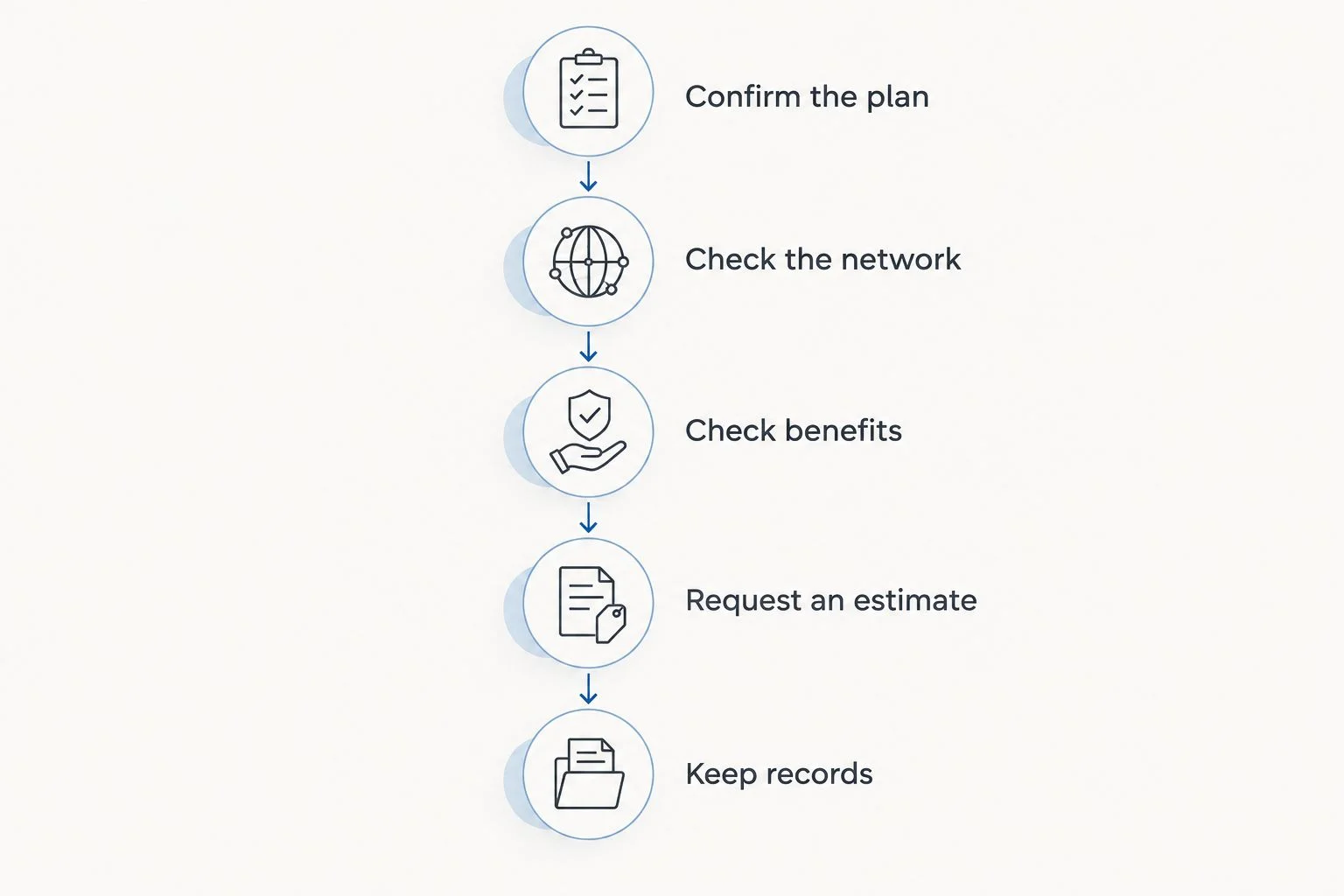
Define the treatment plan before comparing what you would owe.
A useful question is: Does this estimate include everything you expect to bill for this treatment plan? Follow it by asking which organizations could send you a separate bill.
For an insurance check, use your current plan documents and current provider-network information. An answer from a previous benefit period does not establish your coverage now.
Does Ohio Medicaid cover medication-assisted treatment?
Ohio Medicaid includes treatment for substance use disorders, including medications for opioid use disorder. Your exact medication, provider participation, authorization requirements, and covered supporting services still need confirmation through your Medicaid plan and treatment provider.
Ask the provider whether it accepts your specific plan, not simply whether it accepts Medicaid. Then ask your plan how the proposed medication and related appointments are covered.
Do not assume you must pay privately because a particular office does not accept your plan. Ask the plan for participating treatment providers and ask the office to explain any proposed self-pay arrangement before you agree to it.
Is telehealth medication treatment less expensive?
Telehealth can remove travel from an appointment, but it does not automatically reduce medical charges. You still need to check the visit benefit, prescribing arrangements, medication coverage, and any required in-person services.
SOS Wellness provides Ohio telehealth and outpatient addiction treatment. You must be physically in Ohio for an SOS Wellness video visit. Confirm whether your specific addiction treatment needs can be addressed remotely and what in-person care remains necessary. A clinician determines whether medication is appropriate; a video visit does not guarantee a prescription.
For treatment planning, ask the clinician about current prescribing requirements rather than relying on an older article or another patient's experience. Choose telehealth because it fits an appropriate care plan, not because a video appointment appears to promise a lower total bill.
What if you cannot afford the proposed treatment plan?
Tell the provider which part is unaffordable: the prescription, appointments, testing, transportation, or the combined expense. A specific barrier gives the treatment team something concrete to address.
Ask about covered medication alternatives, participating providers, public treatment resources, or financial assistance programs for which you may qualify. These are options to investigate, not benefits every clinic offers. SOS Wellness accepts Ohio Medicaid, including managed plans; confirm your exact plan, service coverage, authorization requirements, and patient costs. Call 513-928-3339 to ask about charges and any available payment arrangements.
If you are uninsured or not using insurance for care, you can usually get a Good Faith Estimate when you request one or schedule care far enough ahead. Scheduling only 0–2 business days ahead does not carry the advance-estimate entitlement. The estimate describes expected charges, not a guaranteed final bill; separate providers may issue separate estimates. See CMS guidance on Good Faith Estimates for eligibility and timing.
Do not ration prescribed medication, change your dose, or stop treatment because a bill is confusing. Contact your prescriber and insurer promptly to discuss a safe plan and clarify the charge.
FAQ
What is the average medication-assisted treatment cost in Ohio?
There is no single statewide patient price that applies across medications, treatment settings, and insurance plans. Request a written estimate covering the medication, appointments, testing, counseling, and any administration services.
Does Ohio Medicaid pay for medication-assisted treatment?
Ohio Medicaid includes substance use disorder treatment, including medications for opioid use disorder. Confirm your specific plan's provider participation, medication coverage, and authorization requirements before starting care.
Is the medication included in the appointment charge?
Medication is not automatically included in the appointment charge. Ask whether a pharmacy, clinic, or other organization bills for it and whether administration creates a separate charge.
Is buprenorphine always the least expensive option?
Buprenorphine is not automatically the least expensive option for every patient. Your prescribed formulation, insurance benefits, visit plan, and related services determine your out-of-pocket expense.
Can I use telehealth for addiction medication treatment?
Telehealth eligibility depends on the medication, clinical situation, provider, and current prescribing requirements. Ask which parts of your proposed treatment can occur remotely and which require in-person care.
What should I ask before paying out of pocket?
Ask for a written estimate separating starting treatment from ongoing care. Confirm which services are included, which organizations bill separately, and whether an appropriate insurance-covered option exists.
What should I do if a treatment bill is higher than expected?
Compare the bill with your written estimate and insurance explanation of benefits, then contact the provider and insurer about the difference. Ask your prescriber for help maintaining a safe treatment plan while the billing issue is addressed.
One last thing
Compare estimates for similar services over the same period, and distinguish starting-treatment charges from ongoing-care charges. A medication-only quote is not equivalent to a full-care estimate. Ask which assessment charges are one-time and which services may recur.
Before starting care, ask who could send you a bill. A clear answer is more useful than a quoted medication charge without context.
If someone is unresponsive or has slow or stopped breathing after possible opioid use, call 911, give available naloxone according to its directions, and follow dispatcher advice. Emergency care is still necessary even if the person improves. For a suicide or mental health crisis, call or text 988; support is available 24 hours a day. Use 911 for immediate danger or a medical emergency.
Further reading
- SAMHSA: Substance use disorder treatment options
- HealthCare.gov: Mental health and substance use benefits
- SAMHSA: Opioid overdose prevention and reversal
Related reading
This article provides general educational information and does not replace an individual clinical assessment. Contact your healthcare provider about your own care.