
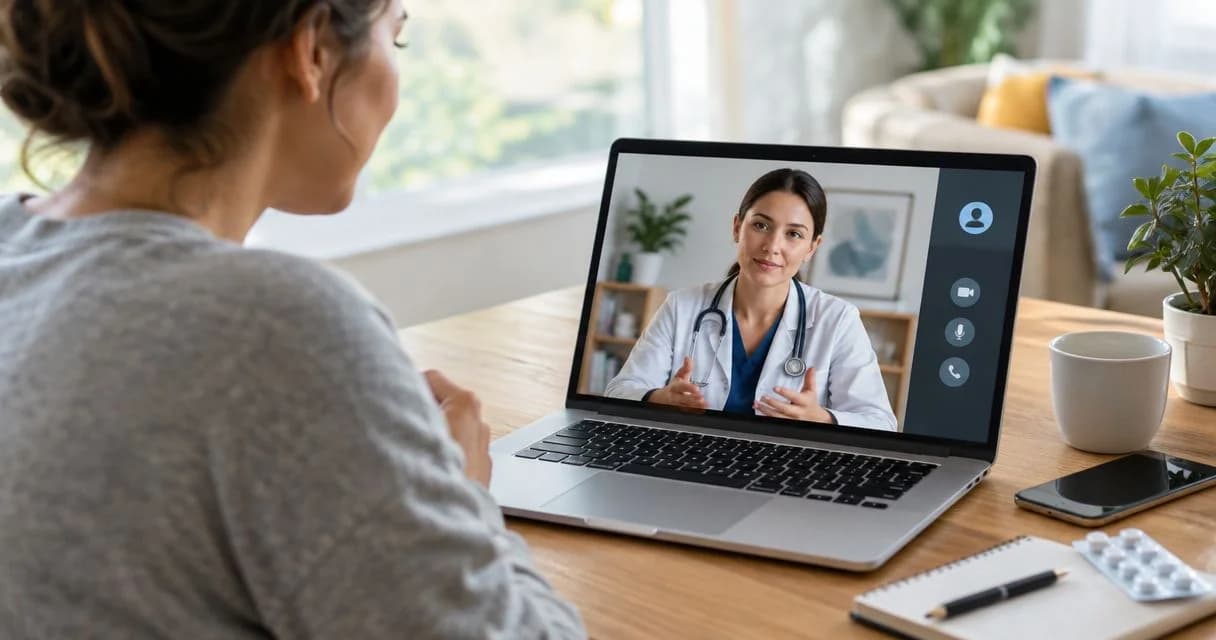
Yes, you can receive some medication-assisted treatment through telehealth in Ohio, but the medication, your clinical needs, and applicable prescribing rules determine what can happen remotely. Telehealth does not mean every prescription, examination, medication dose, or follow-up can take place at home.
At a glance
- Telehealth MAT options in Ohio depend on the medication, clinical assessment, and prescribing requirements.
- Buprenorphine treatment can include telehealth; methadone for opioid use disorder generally requires an opioid treatment program.
- An injectable medication requires an administration visit, even when counseling and follow-up happen remotely.
- SOS Wellness provides Ohio addiction treatment and medication management; confirm the specific medication and telehealth pathway before scheduling.
Why this matters: A virtual appointment is useful only if it connects you to the treatment you need. Before booking with SOS Wellness, ask whether the appointment covers addiction evaluation, prescribing, and ongoing medication management—not just an initial conversation.
Can you get medication-assisted treatment through telehealth?
Yes, but a telehealth appointment is a way to receive care, not a guarantee that a particular medication can be prescribed or provided remotely. A clinician must assess your substance use, medical history, current medications, and immediate safety needs before recommending treatment.
Medication-assisted treatment, often called MAT, uses medication with behavioral care and recovery support tailored to individual needs. For opioid use disorder, you will also hear the term medications for opioid use disorder, or MOUD. Buprenorphine, methadone, and naltrexone have different prescribing, dispensing, and administration requirements. Lack of access to counseling should not block buprenorphine treatment.
| Medication | Treatment pathway | What to ask about telehealth |
|---|---|---|
| Buprenorphine | Outpatient medication treatment for opioid use disorder | Can evaluation, prescribing, and follow-up happen remotely under applicable rules, and what in-person steps are needed? |
| Methadone | Opioid use disorder treatment generally through a certified opioid treatment program | Which visits can be remote, and what dispensing and attendance requirements apply? |
| Oral naltrexone | Use depends on the condition, formulation, and clinical assessment | Can evaluation and monitoring happen remotely, and how will initiation and pain-management needs be planned? |
| Extended-release naltrexone injection | An injectable treatment option when clinically appropriate | Where will the injection be administered, and which evaluation and follow-up visits can be remote? |
These are not interchangeable choices. Your clinician should explain why a medication fits your situation, what its risks are, and what happens if it does not help enough.
Buprenorphine: telehealth can be part of treatment
Buprenorphine is an FDA-approved medication for opioid use disorder. The federal temporary extension permits specified controlled-medication prescribing through telemedicine through December 31, 2026, subject to federal and state requirements. This does not guarantee a prescription or mean that every patient can receive fully remote care. Your clinician must assess whether buprenorphine is appropriate and whether any in-person care is needed. For care after that date, confirm the rules then in effect.
Its practical advantage is that treatment can occur in outpatient care rather than requiring medication dispensing through an opioid treatment program. Telehealth can also support conversations about cravings, side effects, recovery goals, and other medications.
Starting buprenorphine requires an individualized clinician-guided plan because improperly timed initiation can precipitate withdrawal. Tell the prescriber about alcohol, sedatives, and all other medications, and ask how these affect treatment safety. Do not start, stop, or change prescribed medication on your own.
Do not use an online article to decide when to take your first dose. Tell the prescriber exactly what you have used, including fentanyl, prescribed pain medication, alcohol, and sedatives. Accurate information helps the clinician choose a safer approach; it is not a reason to avoid asking for care.
Methadone: telehealth does not replace program-based care
Methadone is an FDA-approved medication for opioid use disorder, but its treatment pathway differs from office-based buprenorphine care. For opioid use disorder, methadone is generally dispensed through a federally certified opioid treatment program rather than prescribed by an ordinary outpatient telehealth practice.
Telehealth can support parts of treatment when the program permits it. That does not mean a video appointment independently authorizes home delivery, take-home doses, or pharmacy pickup.
The benefit is access to medication within a structured treatment setting. The limitation is that dispensing arrangements and required attendance can affect transportation, work, and caregiving plans.
Ask the program which appointments are remote, where medication is dispensed, and how take-home eligibility is determined. A promise of online methadone treatment needs a clear explanation of the opioid treatment program involved.
Naltrexone: remote prescribing and injections are different
Naltrexone is used in opioid use disorder and alcohol-use care, depending on the formulation. Oral and extended-release injectable forms differ; ask the clinician which formulation is appropriate for your condition and how it would be provided.
For appropriate patients, evaluation and follow-up can occur remotely. The injectable form still requires administration by a healthcare professional, so a virtual care plan must identify where that will happen.
Naltrexone initiation requires an opioid-free interval and clinical assessment to avoid precipitated withdrawal. A clinician must plan its start and discuss pain-management implications; do not use a general online timeline to decide when to begin it.
Tell the clinician about recent opioid use, upcoming surgery, and any ongoing pain treatment. Do not assume that choosing a noncontrolled medication removes the need for a careful medical assessment.
Why telehealth treatment requirements vary
For an Ohio appointment, the useful question is not simply whether MAT is available online. Ask which parts of your treatment can happen remotely and which require another setting.
The main factors are:
- Medication choice: Prescribing buprenorphine, dispensing methadone, and administering an injection involve different requirements.
- Current substance use: Recent opioid exposure, alcohol use, and sedating medications affect treatment safety and how medication is started.
- Medical needs: Withdrawal severity, pregnancy, breathing problems, and other health concerns can change the appropriate setting.
- Visit location: The clinician must be authorized to treat you where you are physically located during the appointment.
- Monitoring needs: Examination findings, laboratory work, or drug testing can require a local visit even when follow-up is virtual.
- Provider arrangements: A practice needs a defined prescribing, dispensing, monitoring, and referral process for the treatment it offers.
These differences are not evidence that telehealth is ineffective. They explain why a safe service describes its limits instead of promising that everything happens online.
How do you start telehealth MAT in Ohio?
Start by confirming the treatment pathway before you schedule. A general psychiatry or counseling appointment does not automatically include medication treatment for a substance use disorder.
- Confirm the service. Ask whether the clinician treats your specific substance use disorder and provides the medication being considered.
- Share your history. Prepare a medication list, recent substance-use history, previous treatment experiences, and relevant medical conditions.
- Check visit requirements. Ask whether evaluation is by video, whether any in-person assessment is needed, and where testing takes place.
- Plan medication access. Confirm how prescriptions or medication administration are handled and what to do if there is a problem obtaining treatment.
- Arrange follow-up. Get clear instructions for routine questions, side effects, worsening symptoms, and urgent help outside appointment hours.
A clinician might recommend a different level of care after assessing you. That is a treatment decision, not a failure to qualify for help.
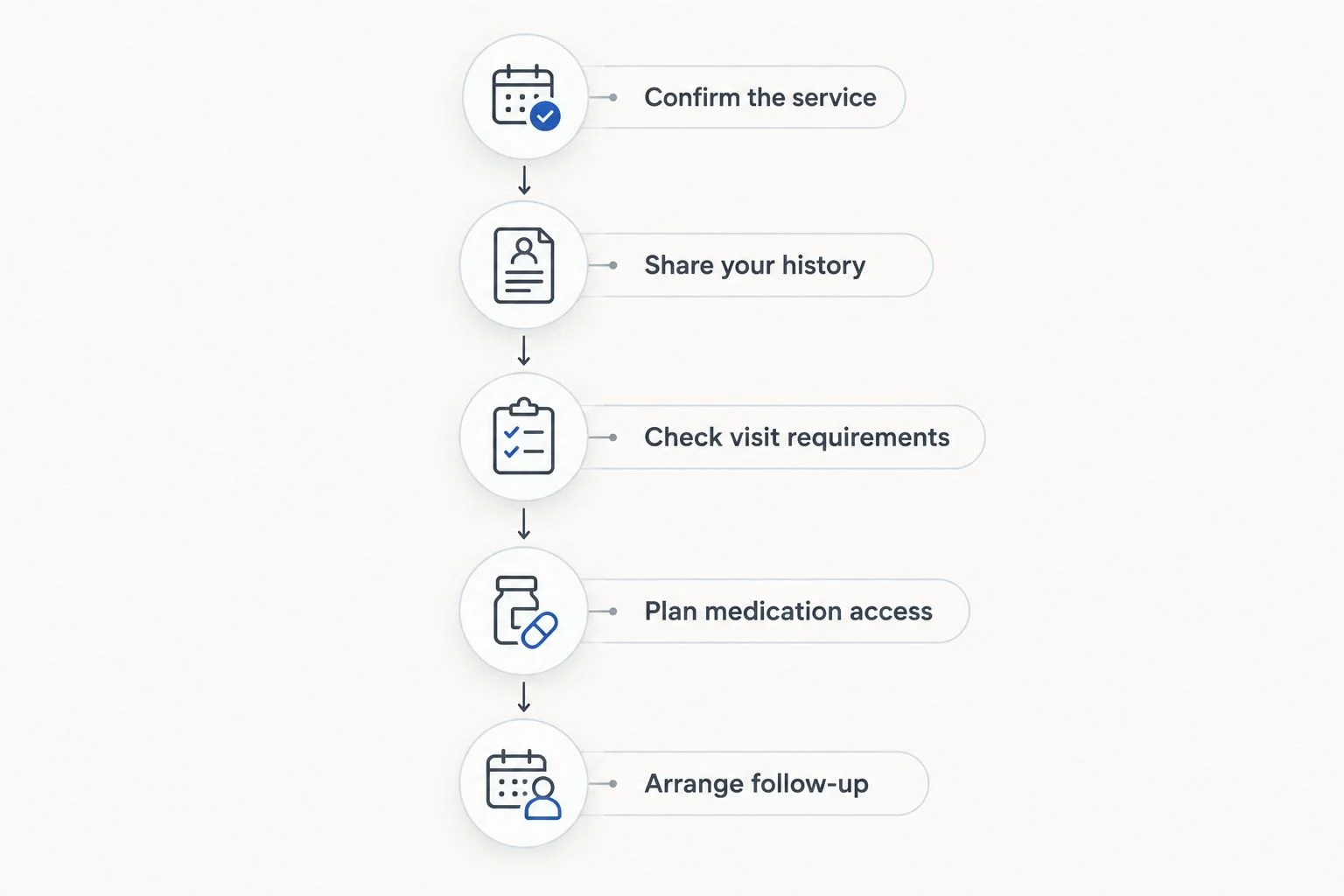
Confirm both the appointment and the medication pathway before treatment starts.
When is in-person care the better choice?
In-person care is needed when an examination, supervised medication administration, or other support cannot be safely provided remotely. Severe withdrawal needs urgent medical assessment. For marked confusion, breathing problems, or immediate danger, call 911 or go to an emergency department rather than waiting for a routine appointment. For a mental health or suicide crisis, call or text 988.
Alcohol withdrawal can be dangerous, and stopping benzodiazepines abruptly can also cause serious complications. If you have heavy or prolonged use, a history of withdrawal seizures, or concerning symptoms, seek medical advice rather than attempting withdrawal alone.
Telehealth also has practical limits. You need enough privacy to speak honestly, a reliable connection, and a way to follow the care plan. An in-person visit can be more useful when those conditions are missing.
Hybrid care is another option: remote counseling and medication follow-up, with local visits for examination, testing, or injections. The right setting is the one that meets your needs safely, not the one with the fewest appointments.
Can counseling replace medication for opioid use disorder?
Counseling and medication have different roles. Counseling can help you address triggers, relationships, coping skills, and recovery goals; medication treats opioid use disorder through its effects on opioid receptors and related symptoms.
Medication is an important treatment option for opioid use disorder. Ask your clinician about the expected benefits and risks of the specific medication being considered. Counseling is valuable, but needing medication does not mean you have failed at recovery or lack motivation.
Ask how behavioral support can fit your needs and medication plan. Lack of counseling access should not block buprenorphine treatment. If attendance is difficult, discuss support options rather than stopping medication on your own.
Does insurance cover telehealth MAT in Ohio?
Coverage depends on your plan, the provider, the medication, and the service being billed. A covered video appointment does not automatically establish coverage for prescriptions, laboratory work, injections, or another treatment program.
Ask the provider and insurer about network participation, referral requirements, prior authorization, and pharmacy benefits. Describe the actual service you need; asking only whether a plan covers telehealth leaves important questions unanswered.
Keep medication coverage separate from counseling coverage when checking benefits. If one part of treatment is not covered, ask about an alternative care arrangement before assuming the entire plan is unavailable.
What should you ask a provider before booking?
Ask for direct answers about scope and continuity, not just appointment availability. SOS Wellness offers outpatient mental health and addiction services, including medication-assisted treatment options. This guide is published by SOS Wellness, which offers services discussed here; it is not an independent provider ranking. Confirm the specific medication, clinician availability, and telehealth arrangement before scheduling. For an SOS Wellness video visit, you must be physically in Ohio.
Use these questions during scheduling:
- Does the appointment include evaluation for medication treatment of my substance use disorder?
- Which clinician manages prescriptions and medication changes?
- What requires an in-person visit, and where would that happen?
- How are testing, counseling, and other mental health needs coordinated?
- Who should I contact if I have side effects or cannot obtain my medication?
- What happens if outpatient treatment is not enough support?
A provider should explain both what it offers and where another service is necessary. General addiction treatment and medication management services do not, by themselves, confirm access to every MAT medication.
Discuss your treatment needs
Ask about addiction treatment, medication management, and which parts of care can happen through telehealth.
FAQ
Can I get medication-assisted treatment online in Ohio?
Yes, some medication-assisted treatment can be provided through telehealth in Ohio. The medication, clinical assessment, applicable prescribing requirements, and provider's services determine which parts can happen remotely.
Can a telehealth clinician prescribe buprenorphine?
A qualified clinician can prescribe buprenorphine through telehealth when applicable requirements are met. Ask whether your evaluation or follow-up requires any in-person care and how medication initiation will be supervised.
Can I get methadone through a regular online appointment?
A regular online appointment does not replace an opioid treatment program for methadone treatment of opioid use disorder. Ask the program directly about remote appointments, dispensing, and take-home requirements.
Can I receive a naltrexone injection during a video visit?
No, a video visit cannot administer a naltrexone injection. Evaluation and follow-up can be remote when appropriate, but a healthcare professional must give the injection.
Do I need counseling if I take medication for opioid use disorder?
Behavioral support should be tailored to your needs. Counseling can help with recovery, but lack of access should not block buprenorphine treatment. Discuss available support with your clinician, and do not stop or change medication without prescriber guidance.
Does SOS Wellness offer every type of telehealth MAT?
SOS Wellness provides addiction treatment, medication management, and telehealth mental health services in Ohio. Confirm the specific medication and treatment pathway directly; those services do not establish that every MAT option is offered.
What if I am in crisis while waiting for an appointment?
Call 911 for an overdose, breathing emergency, or immediate danger. In the United States, call or text 988 for suicide or emotional crisis support, available 24 hours a day, 7 days a week; do not wait for a routine appointment.
One last thing
For your appointment, ask this before ending the visit: What should I do if I cannot obtain or take my medication as planned? A prescription alone is not a complete care plan. You also need a clear next step if the pharmacy cannot fill it, side effects develop, or your symptoms worsen.
If someone is unresponsive or breathing slowly after opioid use, call 911, give available naloxone according to its directions, and follow dispatcher advice. Emergency care is still necessary even if the person improves. Do not wait for a telehealth response. For suicide or emotional crisis support, call or text 988.
Further reading
- SAMHSA: Substance use disorder treatment options
- NIMH: Getting mental health support virtually
- SAMHSA: Opioid overdose prevention and reversal
Related reading
This article provides general educational information and does not replace an individual clinical assessment. Contact your healthcare provider about your own care.