

Working during virtual IOP in Ohio may be possible when your treatment team considers it appropriate and you can attend every required session. The deciding factors are your symptoms, the program’s actual schedule, and whether you can participate privately without working at the same time.
At a glance
- Can you work while in virtual IOP? Yes, when your clinical needs, attendance requirements, and job duties fit.
- Virtual IOP removes travel, not treatment time; you need protected time and a private space.
- Reduced hours or intermittent leave can help, but workplace protections depend on eligibility and individual circumstances.
- SOS Wellness provides outpatient mental health services for Ohio individuals and families; emergency needs require immediate help.
Can you work while attending virtual IOP in Ohio?
You can keep working during a virtual intensive outpatient program, but remote treatment is not treatment you attend in the background. You need to be available for the session, able to speak when appropriate, and free from competing job duties.
Start with the program’s attendance requirements, then compare them with your actual work responsibilities. A schedule that looks workable on paper can still fail if your employer regularly changes shifts or expects immediate responses during treatment.
For Ohio individuals and families seeking outpatient mental health care, SOS Wellness provides therapy, psychiatry, medication management, addiction treatment, and telehealth services. Ask about the appropriate level of care before trying to fit treatment around a job.
How work arrangements compare
These are planning options, not guarantees that a particular arrangement will meet your clinical needs or receive employer approval.
| Work arrangement | Potential fit | Main advantage | Main limitation |
|---|---|---|---|
| Keep your usual hours | People whose work and treatment schedules do not overlap | Preserves your existing routine | Leaves less room for rest and unexpected demands |
| Adjust your schedule | People whose employer permits changes to working hours | Creates a protected treatment window | Requires agreement and reliable scheduling |
| Reduce your hours | People who need more recovery time between responsibilities | Lowers the overall workload | Changes earnings and requires benefits clarification |
| Take medical leave | People whose symptoms or treatment needs prevent reliable work | Removes competing job demands during leave | Eligibility, documentation, and pay arrangements vary |
Choose the arrangement that lets you participate fully, not the one that simply keeps your calendar looking unchanged. Your clinician can help assess whether continuing to work supports or interferes with treatment.
Why this matters
Virtual IOP lets you receive structured care without traveling to each session. It does not remove the effort involved in treatment, including discussing difficult experiences, practicing skills, and following the care plan between appointments.
Keeping a job can preserve routine and connection. But a full workload can also compete with sleep, appointments, and recovery. The useful question is not just whether you can log in; it is whether you can work safely and still benefit from care.
For your treatment plan, consider your whole day rather than the session window alone. Include meals, caregiving, sleep, medication appointments, and the time you need to settle after emotionally demanding discussions.
How to build a workable employment and treatment plan
Confirm requirements
Ask the program for its actual schedule before making promises to your employer. Confirm the days, session lengths, attendance expectations, and whether individual appointments happen outside the group schedule.
Also ask what happens if work causes a late arrival or missed session. Do not assume that an online program offers recordings, flexible attendance, or permission to leave early; group treatment involves privacy and participation requirements.
Check job demands
Describe your work accurately to the treatment team. Include shift changes, driving, equipment use, customer contact, decision-making responsibilities, and whether you can step away without being interrupted.
A desk job is not automatically easy to combine with treatment. Constant messages, deadlines, and on-call duties can make protected attendance difficult even when you work from home.
Protect privacy
Choose a space where other people cannot overhear the session or see your screen. Headphones help with incoming audio, but they do not stop coworkers, family members, or customers from hearing what you say.
Ask the program about its telehealth location and technology requirements. For SOS Wellness telehealth visits, you must be physically in Ohio. Do not participate while driving, serving customers, or performing another task that divides your attention or creates a safety risk.
Arrange support
If treatment overlaps with work, speak with the appropriate workplace contact about schedule changes, accommodations, or leave. Your supervisor handles scheduling, while human resources or a leave administrator can explain the formal process.
Ask what documentation is required and where it should go. Share the information needed for the process rather than giving coworkers details about your diagnosis or group discussions.
Review fit
Agree with your clinician on what would trigger a change in the plan. Examples include repeated absences, worsening symptoms, difficulty staying awake, or work mistakes that affect safety.
Review the arrangement after treatment begins instead of treating the original schedule as permanent. A change in hours or temporary leave is a treatment adjustment, not a failure to manage your responsibilities.
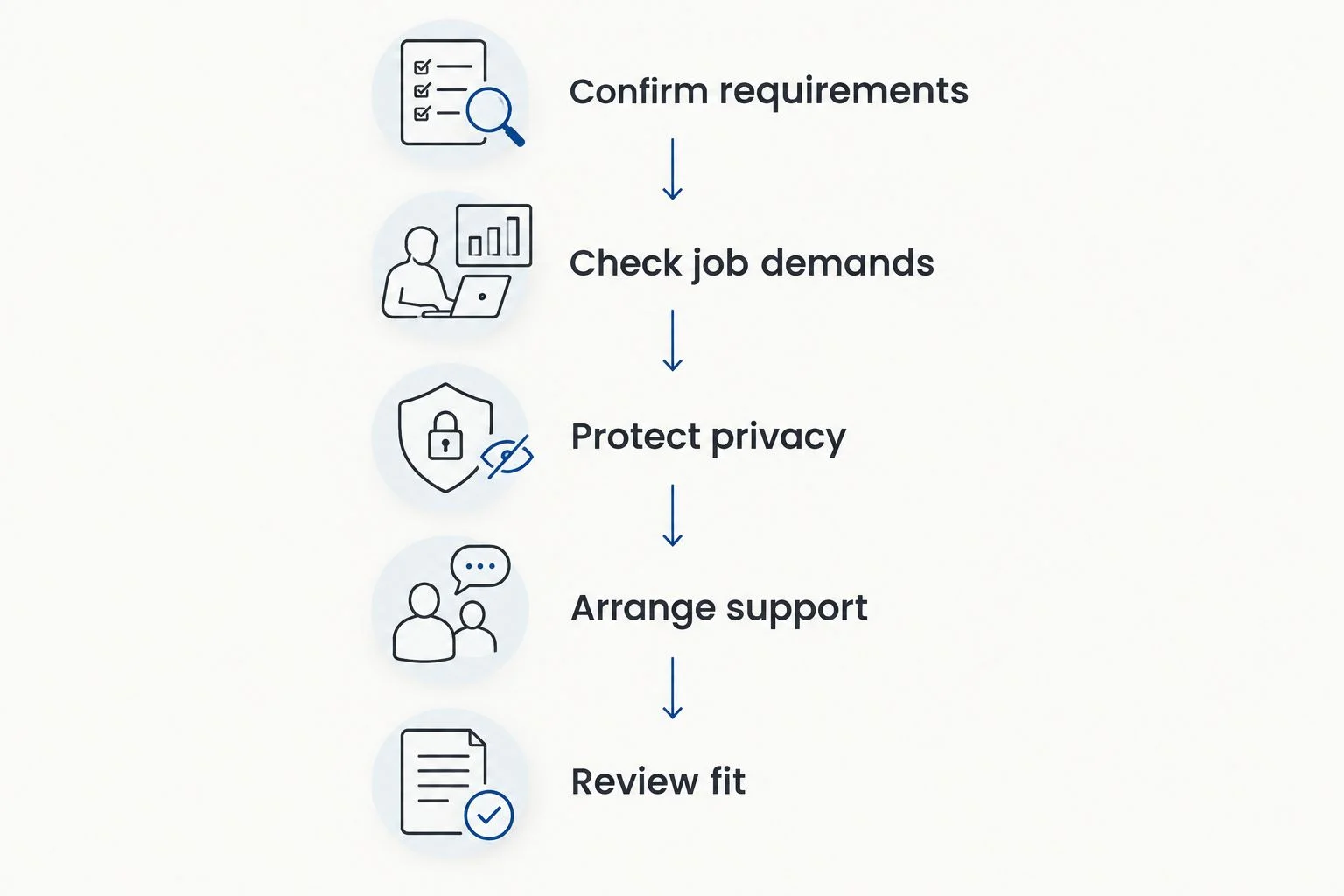
Confirm treatment requirements before asking work to accommodate the schedule.
Why working during virtual IOP varies
Your ability to work during virtual IOP depends on more than whether sessions happen online. These factors determine whether the arrangement is practical:
- Clinical needs: Symptoms that affect concentration, emotional regulation, or safety can interfere with both treatment participation and job performance.
- Attendance requirements: The program’s required sessions take priority over assumptions about flexible online access.
- Job responsibilities: Driving, operating equipment, supervising others, and responding to urgent requests require attention that cannot be shared with treatment.
- Schedule control: Predictable working hours make planning easier than rotating shifts or frequent last-minute changes.
- Private space: A reliable connection is not enough if other people can overhear confidential conversations.
- Recovery demands: Sleep, caregiving, appointments, and treatment homework all compete for time outside your paid work.
The right schedule protects both treatment participation and your ability to do your job safely. If either repeatedly breaks down, revisit the plan with your clinician and workplace contact.
Can you work full-time while in virtual IOP?
Yes, full-time work can fit with virtual IOP when required sessions fall outside work hours and your symptoms allow safe, reliable performance. A non-overlapping calendar is necessary, but it does not establish that the total workload is manageable.
Ask yourself whether you can concentrate during treatment after a workday and recover enough to work the next day. If you are repeatedly choosing between sleep and treatment responsibilities, discuss reduced hours or leave rather than silently missing sessions.
Do you have to tell your employer you attend virtual IOP?
Whether you need to disclose information to your employer depends on your job, any applicable reporting or fitness-for-duty requirements, and whether you request leave or an accommodation. A formal request may require supporting medical information, but that does not mean you need to share treatment details with coworkers. Ask the leave administrator or a qualified employment adviser what applies to your situation.
Ask human resources what information is necessary, who receives it, and how medical documentation is handled. Do not assume that a casual conversation with a manager completes a formal leave request.
Can FMLA cover time off for virtual IOP?
Eligible employees of covered employers may receive up to 12 workweeks of unpaid, job-protected FMLA leave in the applicable 12-month period for a qualifying serious health condition. Group health benefits continue on applicable terms. Virtual IOP attendance alone does not establish eligibility; the condition, treatment, employer coverage, and employee eligibility matter.
The U.S. Department of Labor lists these general employee eligibility requirements:
- At least 12 months of employment with the employer.
- At least 1,250 hours of service during the preceding 12 months.
- A worksite where the employer has 50 employees within 75 miles.
These are general federal rules; special employee rules and different public-employer and school coverage rules can apply. Your employer must also be covered by FMLA. For remote employees, the worksite is generally the office that assigns their work or receives their reports, not their home.
FMLA leave is generally unpaid. When medically necessary and otherwise qualifying, leave can be taken intermittently or through a reduced schedule rather than only as one continuous absence.
Ask the leave administrator about required notice, certification, deadlines, paid-leave coordination, and benefits. Sufficient medical certification does not necessarily require a diagnosis. Not all absences or workplace misconduct are protected. Separately, the ADA generally covers employers with 15 or more employees and may require reasonable accommodations for qualified individuals with disabilities unless they impose undue hardship. Essential job duties and lawful performance and conduct rules still apply; a particular schedule change is not guaranteed. For substance-use concerns, current illegal drug use and recovery or lawful medication use require different legal analyses. Ask a qualified employment adviser about your circumstances.
This is general educational information, not individualized medical or legal advice. Confirm employment questions with your leave administrator or a qualified employment adviser.
When time away from work is the better choice
Temporary leave deserves a direct conversation when continuing to work interferes with safety, attendance, or clinical progress. Trying harder is not a substitute for having enough time and support.
Bring these concerns to your treatment team:
- You repeatedly miss treatment because of job demands.
- Symptoms prevent you from completing essential duties safely.
- You cannot obtain a private, interruption-free treatment space.
- The combined workload leaves you unable to maintain basic sleep and daily care.
- Your clinician recommends more support than the current arrangement provides.
Virtual IOP is not an emergency service. Call 911 for immediate danger or a medical emergency; call or text 988 for suicide or mental health crisis support. Do not wait for the next scheduled session when immediate help is needed.
What to ask before starting treatment
Before committing to a virtual IOP schedule, get clear answers to these questions. A short planning conversation can identify conflicts before they become missed treatment.
- What attendance is required, and what additional appointments should I plan for?
- What should I do if my employer changes my shift?
- What privacy and location requirements apply to telehealth sessions?
- Who can help with clinically appropriate workplace documentation?
- How will the treatment team assess whether working remains appropriate?
- What is the plan if my symptoms worsen between sessions?
SOS Wellness offers virtual IOP for adults across Ohio, with a published Tuesday, Thursday and Friday schedule and evening options. Discuss your work responsibilities alongside your symptoms during intake. Clinical suitability, specific group times and a group start date require confirmation before you arrange your work schedule.
FAQ
Can you work while in virtual IOP in Ohio?
Yes, you can work while in virtual IOP in Ohio when your clinician considers work appropriate and you can meet all attendance requirements. You need protected treatment time, privacy, and enough capacity to work safely.
Can I attend virtual IOP while working from home?
Working from home does not make it appropriate to work during virtual IOP sessions. Arrange time away from job duties and use a private space where you can participate without interruptions.
How many hours should I ask my employer to protect?
Ask your program for its actual attendance requirements before requesting a work adjustment. Include required group sessions, separate appointments, and any necessary transition time rather than relying on a generic estimate.
Does my employer have to approve time off for virtual IOP?
Employer approval depends on applicable leave or accommodation rules and your circumstances. FMLA eligibility, a qualifying health condition, and documentation requirements must be assessed; attending virtual IOP alone does not guarantee protected leave.
Will FMLA pay me while I attend virtual IOP?
FMLA leave is generally unpaid, although available paid leave or other benefits can affect how an absence is paid. Ask your leave administrator to explain your specific arrangement before changing your work hours.
Can SOS Wellness help with mental health care while I work?
SOS Wellness provides outpatient mental health services, including therapy, psychiatry, medication management, addiction treatment, and telehealth in Ohio. Discuss your work schedule during assessment and confirm which services fit your clinical needs.
What should I do if I cannot stay safe until my next session?
Call 911 for immediate danger or a medical emergency, or call or text 988 for suicide or mental health crisis support. A scheduled virtual IOP session is not a substitute for urgent help.
One last thing
A free calendar slot is not the same as usable treatment time. Before starting virtual IOP, walk through an ordinary workday and identify exactly when you will stop working, where you will join privately, and how you will handle an unexpected request from your employer.
If that plan depends on nobody interrupting you in a space you do not control, change the arrangement before treatment begins. Protecting the session is part of making treatment workable.
Further reading
- NIMH: Psychotherapies
- NIMH: Getting mental health support virtually
- US Department of Labor: Mental health and FMLA
Related reading
This article provides general educational information and does not replace an individual clinical assessment. Contact your healthcare provider about your own care.