
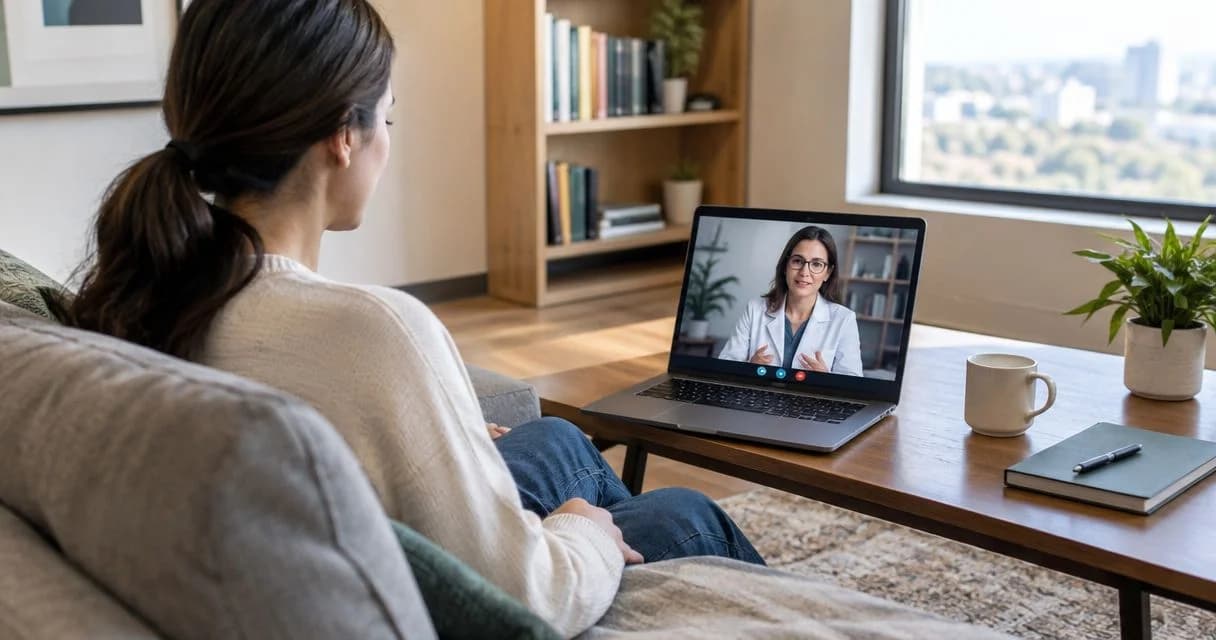
Yes, a same-day psychiatry appointment in Ohio is possible when a clinician can accept and appropriately assess you that day, but you need direct confirmation before making plans. A same-day appointment does not guarantee a prescription, a specific medication, or ongoing treatment with that clinician. The practical steps below explain how to request an assessment, check whether telehealth fits, and recognize when emergency care comes first.
At a glance
- Confirm that the appointment includes a psychiatric assessment—not just a callback or intake form.
- Sos-wellness provides Ohio outpatient psychiatry and medication management; request scheduling information directly.
- Telehealth still requires clinical assessment, prescribing decisions, and a follow-up plan.
- Call 911 for immediate danger; call or text 988 for suicide or mental health crisis support.
Why this matters
When you need help today, a booking form and a psychiatric assessment are not the same thing. You need to know what the appointment includes, who will see you, and what happens afterward—not just whether someone will return your call.
Sos-wellness provides outpatient psychiatry, therapy, medication management, addiction treatment, and telehealth mental health services in Ohio. SOS provides outpatient care, not emergency response. Same-day appointment availability must be confirmed directly with staff. Ask about the appropriate next step for your situation.
When requesting an appointment, describe your immediate concern plainly. Tell the scheduling team whether you need a first evaluation, help with an existing treatment plan, or support because symptoms have changed.
Can you get a same-day psychiatry appointment in Ohio?
Yes—but only a direct scheduling confirmation establishes that you have a same-day psychiatric assessment. An online inquiry, automated acknowledgment, or preliminary screening does not establish that a clinician will evaluate you that day.
Use this sequence when contacting an office:
- State where you are. Tell the office that you will physically be in Ohio during the appointment, including for telehealth.
- Describe the concern. Explain what changed, how it affects daily life, and whether there are immediate safety concerns.
- Request the right visit. Ask specifically for a psychiatric evaluation or medication-management assessment, not simply an intake call.
- Confirm the clinician. Ask whether you will see a psychiatrist or another qualified prescribing clinician.
- Clarify the next step. Confirm how you receive the appointment details and what you should do if symptoms worsen before the visit.
You can say: I am in Ohio and need a psychiatric assessment today because my symptoms have changed. Does the appointment include an evaluation by a prescribing clinician, and what should I do if I need more immediate help?
Keep your explanation factual. You do not need to diagnose yourself or find the perfect clinical terms before asking for care.
What counts as a same-day psychiatry appointment?
A same-day psychiatric appointment means a clinician assesses you that day. The assessment can include symptoms, medical history, current medications, substance use, safety, and treatment options. It does not automatically mean the clinician will complete every part of diagnosis or treatment during that visit.
Different contacts serve different purposes:
| Contact or service | Potential fit | What it provides | Important limitation |
|---|---|---|---|
| Scheduling or intake call | Explaining your needs and arranging care | Initial questions and administrative information | It is not necessarily a psychiatric evaluation |
| Psychiatric evaluation | Assessing symptoms and planning treatment | Clinical assessment and discussion of next steps | A prescription or final diagnosis is not guaranteed |
| Medication-management visit | Reviewing an existing medication plan | Discussion of response, side effects, and treatment decisions | Records or further assessment can be necessary |
| Crisis support | Getting help during emotional distress | Immediate support and guidance about safety | It does not replace ongoing outpatient psychiatry |
| Emergency care | Addressing immediate danger or a medical emergency | Urgent medical and safety assessment | It is not a substitute for routine follow-up |
For any booking, ask what the scheduled service actually includes. An appointment label matters less than the clinical work planned for that visit.
Does a same-day visit mean you will get medication?
No. A psychiatric assessment can lead to medication, therapy, additional evaluation, a different level of care, or a combination of approaches. The clinician must decide what is appropriate after reviewing your circumstances.
If you are seeking a specific medication, name it and explain your treatment history. Do not assume an earlier prescription guarantees that a new clinician will continue it without review.
Same-day telehealth psychiatry in Ohio
Potential fit: People who can participate safely from a private location and whose concerns are appropriate for a remote assessment.
Telehealth removes the trip to an office. It does not remove the need for an evaluation, informed consent, identity checks, or a plan for emergencies and follow-up.
Before a remote visit, confirm:
- Your location: Tell the office where you will physically be during the appointment.
- The visit format: Ask whether you need video and what equipment or connection is required.
- Privacy: Choose a place where you can discuss symptoms and answer safety questions openly.
- Connection problems: Ask how to reconnect or contact the office if the visit is interrupted.
- Treatment limits: Ask whether your concern requires an in-person examination, records, or other assessment.
The limitation is important: a convenient format is not automatically the right clinical setting. Severe confusion, immediate safety concerns, or a possible medical emergency require a different response.
Confirm telehealth prescribing requirements directly with the clinician. Rules depend on the medication and circumstances; an online appointment alone does not establish eligibility for a prescription. For SOS Wellness video visits, you must be physically in Ohio, and staff must confirm whether the requested service is available remotely for your situation.
Same-day in-person psychiatric assessment
Potential fit: People whose clinician recommends an in-person assessment or who cannot participate privately and effectively by video.
An in-person visit gives you a shared clinical setting without relying on your home internet connection. It also requires travel and arrangements for work, caregiving, or transportation.
Ask whether the appointment is at an outpatient office or another care setting. Confirm the location before leaving, and bring the information needed for the assessment rather than assuming the office already has your records.
Do not travel to a routine outpatient appointment instead of seeking emergency help when you are in immediate danger. If you are too distressed, impaired, or unwell to drive safely, do not drive yourself.
Why same-day psychiatry access varies
The right appointment depends on more than an opening in a schedule. These factors determine whether a particular clinician and setting fit your needs:
- Clinical urgency: Immediate danger requires emergency assessment rather than routine scheduling.
- Visit purpose: A first evaluation differs from a follow-up with a clinician who already knows your history.
- Age: Ask whether the clinician treats the patient's age group, especially when arranging care for a child.
- Treatment needs: Medication history, substance use, and physical symptoms affect the assessment and next steps.
- Location and format: Your physical location and ability to use telehealth affect whether a remote visit is appropriate.
- Administrative requirements: Confirm referral, insurance, consent, and registration requirements before treating an appointment as arranged.
Ask what the office needs from you now. Sending relevant records or completing requested forms helps the clinician work from accurate information, but paperwork alone does not establish a treatment relationship.
How do you decide which kind of help to seek?
Start with safety, then match the setting to the concern. Do not use a search result or appointment calendar to decide whether an emergency can wait.
- Immediate danger: Call 911 or go to the nearest emergency department for a life-threatening emergency, overdose, serious injury, or inability to remain safe.
- Crisis support: Call or text 988 when you need suicide or mental health crisis support, including when you are unsure what to do next.
- Outpatient assessment: Contact a mental health office when you can remain safe while arranging an evaluation and follow the safety guidance you receive.
These are starting points, not a diagnosis. If your condition changes while you are arranging outpatient care, reassess the next step rather than staying committed to the original plan.
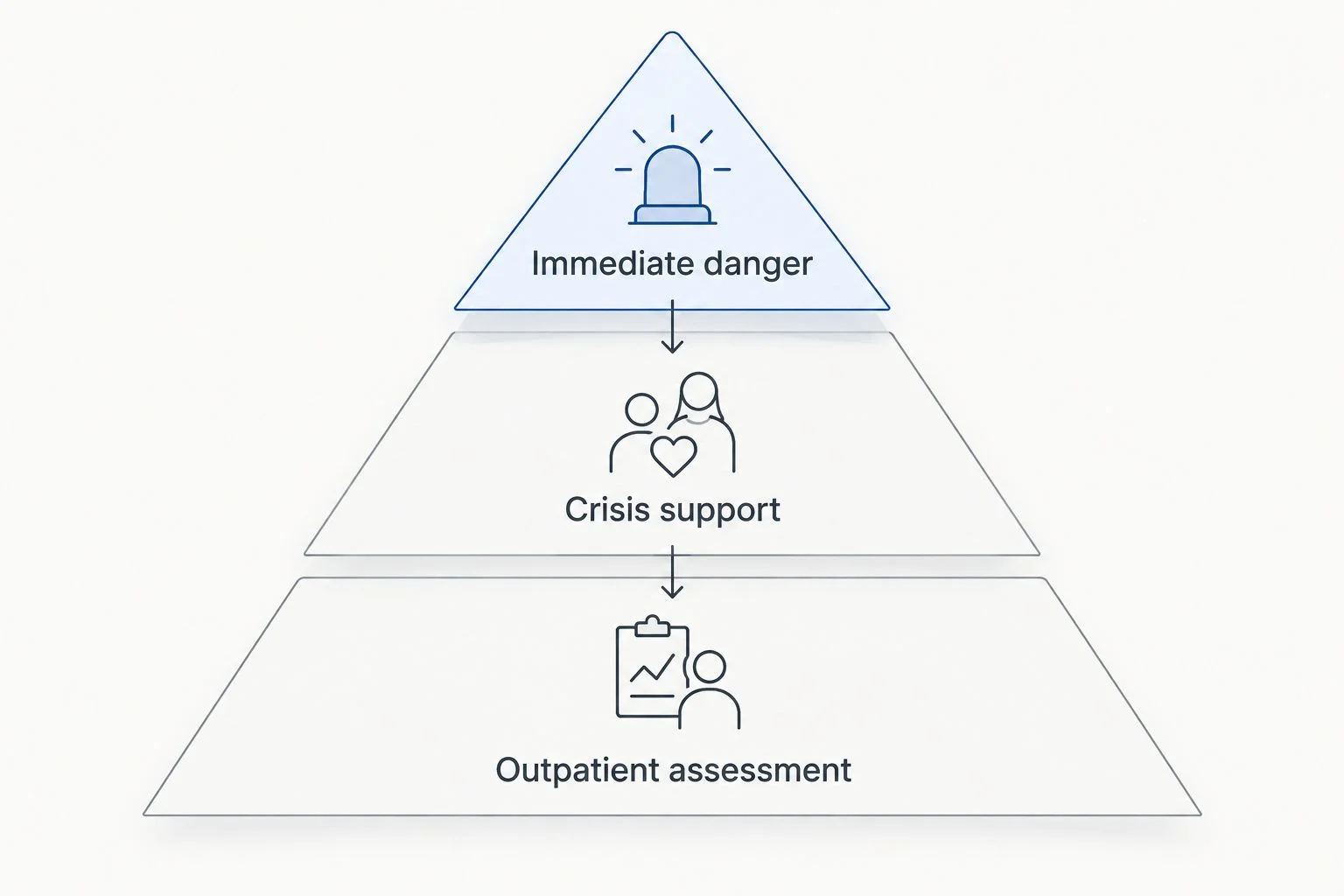
Choose the care setting by safety needs, not just appointment convenience.
What should you prepare before the appointment?
You do not need a polished personal history. You need enough accurate information to explain what is happening and help the clinician assess treatment safely.
Prepare a short note covering:
- Your main concern: What prompted you to seek help today?
- Symptoms and changes: Describe sleep, mood, anxiety, concentration, behavior, or other concerns in your own words.
- Current medications: Include names, directions, recent changes, supplements, and anything you have stopped taking.
- Previous treatment: Note past clinicians, diagnoses, medication responses, side effects, and hospital care.
- Substance use: Describe alcohol, cannabis, other substances, and any concerns about withdrawal.
- Safety concerns: Be direct about thoughts of suicide, self-harm, harming others, or difficulty caring for yourself.
For a child, add observations from home and school when relevant. Tell the office who will attend and ask about consent requirements before the visit.
Honest details are more useful than minimizing symptoms to make the appointment feel easier. If you have trouble speaking when distressed, bring your written note or ask whether a trusted support person can participate with your permission.
What if you are running out of psychiatric medication?
Contact your current prescriber and pharmacy promptly. Explain the medication, your prescribed directions, what remains, and whether you have missed doses or developed symptoms. Ask what the appropriate next step is; do not assume a new same-day appointment guarantees a refill.
Do not change your dose, share medication, or use someone else's prescription to bridge a gap. Some medicines require a supervised plan when stopped or changed, and a new clinician needs enough information to make a safe decision.
If you have severe symptoms, a suspected overdose, or another medical emergency, seek emergency care. Medication continuity is important, but immediate safety comes first.
When should you call 988 or 911 instead?
Call 911 for immediate danger or a medical emergency. Examples include an overdose, a serious injury, or an immediate threat to someone's life. You do not need an outpatient referral before seeking emergency help.
Call or text 988 for suicide or mental health crisis support. SAMHSA describes the 988 Suicide & Crisis Lifeline as providing support 24 hours a day, 7 days a week. You can contact the Lifeline even when you are unsure whether your experience counts as a crisis.
Keep these crisis contacts separate from the outpatient office number. A portal message or appointment request is not an emergency response system.
If it is safe to do so, tell a trusted person that you need support. If someone is in immediate danger, call 911 rather than waiting for a routine appointment response. Stay with them only if you can do so safely, and follow the emergency dispatcher's instructions.
What should happen after the assessment?
Leave with a clear next step, even when treatment requires more information. Ask what the clinician recommends, how follow-up works, and which changes mean you should seek help sooner.
Useful questions include:
- What is the treatment plan, and what decisions remain open?
- If medication is prescribed, what directions and side effects should I understand?
- Who should I contact with questions or worsening symptoms?
- What should I do outside office hours?
- How will records, referrals, or additional assessments be handled?
A same-day visit starts care; it does not replace a follow-up plan. Before ending the appointment, repeat the next step in your own words so the clinician can clarify anything uncertain.
FAQ
Can I get a same-day psychiatrist appointment in Ohio?
A same-day psychiatric assessment is possible when a clinician confirms that they can appropriately see you that day. Ask whether the appointment includes a clinical evaluation rather than only scheduling or intake.
Can I see an Ohio psychiatrist online today?
Ask the practice directly whether a same-day telehealth assessment is appropriate and can be arranged. Confirm your physical location, the clinician's role, and the visit requirements before treating it as booked.
Will a same-day psychiatrist prescribe medication?
A same-day appointment does not guarantee medication. The clinician decides what treatment is appropriate after reviewing your symptoms, history, safety, and other relevant information.
Can I get a psychiatric medication refill without my records?
A new clinician must decide whether the information available supports a safe prescription. Contact your current prescriber and pharmacy promptly rather than relying on a new appointment to guarantee a refill.
Does Sos-wellness provide psychiatric care in Ohio?
Sos-wellness provides outpatient psychiatry, medication management, therapy, addiction treatment, and telehealth mental health services in Ohio. Contact the practice directly to discuss the appropriate assessment and scheduling process.
Can a child have a same-day psychiatry appointment?
A child's appointment requires confirmation that the clinician treats that age group and can appropriately assess the concern. Ask about guardian participation, consent, and information from home or school.
Should I call 988 or wait for a psychiatrist?
Call or text 988 when you need suicide or mental health crisis support rather than waiting for a routine appointment response. Call 911 for immediate danger or a medical emergency.
One last thing
The most useful question is not simply whether someone can see you today. Ask: What happens if I feel worse before the appointment or after the visit?
Keep the answer with your appointment details. A clear safety and follow-up plan matters beyond the first conversation.
Further reading
Related reading
This article provides general educational information and does not replace an individual clinical assessment. Contact your healthcare provider about your own care.