

New and expecting parents’ therapy is mental health care during pregnancy and early parenthood with the aim of helping you manage distress, relationships, and daily functioning. In Ohio, choosing care means accounting for disrupted sleep, feeding schedules, recovery, and whether you need therapy alone or a psychiatric evaluation too.
At a glance
- Choose therapy during pregnancy or early parenthood based on symptoms, safety, and daily functioning—not whether you feel overwhelmed enough.
- SOS Wellness provides Ohio outpatient therapy, psychiatric care, medication management, and telehealth services.
- Telehealth removes travel, but you still need privacy and a plan for interruptions.
- Call 911 for immediate danger; call or text 988 for a suicide or mental health crisis.
Why therapy matters for new and expecting parents
You do not need a diagnosis to ask for help. Therapy can address persistent worry, sadness, birth-related distress, relationship conflict, or difficulty adjusting to parenthood. Partners and non-birthing parents also deserve support; mental health care is not limited to the person who gave birth.
Pregnancy and early parenting create practical barriers to treatment. You need appointments that fit around medical visits and caregiving, plus enough privacy to talk honestly. A plan that ignores those constraints is harder to follow, even when the treatment itself fits your needs.
SOS Wellness is an outpatient therapy and psychiatric care option for Ohio parents seeking mental health support. SOS Wellness provides therapy, psychiatry, medication management, addiction treatment, and telehealth services. Ask about experience treating pregnancy-related and postpartum concerns before choosing a clinician.
For your care search, start with what is happening now—not a label you found online. Trouble sleeping even when someone else is caring for the baby, constant fear, or feeling disconnected from everyday life all deserve a conversation with a healthcare professional.
How to choose therapy and start care
Recognize what has changed
Separate ordinary adjustment from symptoms that persist, intensify, or interfere with daily life. Being tired after interrupted sleep is different from being unable to sleep despite having a chance to rest. Worry also needs attention when it becomes difficult to control or leads you to avoid necessary activities.
The American College of Obstetricians and Gynecologists’ patient guidance on postpartum depression says baby blues usually improve within 1–2 weeks. Do not wait for that threshold if symptoms are severe or safety is uncertain. Depression and anxiety also occur during pregnancy, so support does not need to wait until delivery.
Use a simple note on your phone or paper to capture patterns. This is preparation for an assessment, not a self-diagnosis.
- Record when the changes started and whether they are getting worse.
- Note sleep opportunities separately from how much you actually sleep.
- Describe effects on eating, self-care, relationships, and caregiving.
- Write down panic, unwanted thoughts, or distressing birth memories.
- Tell a clinician directly about thoughts of suicide or harming someone.
Match the level of care to your needs
Start by describing symptoms to your obstetric clinician, primary care clinician, or an established mental health professional. They can help assess whether outpatient therapy fits or whether you need another level of support. A referral is useful, but it is not a substitute for an actual assessment.
Individual therapy offers a place to work on coping, mood, and adjustment. Psychiatric evaluation addresses diagnosis and whether medication belongs in your treatment plan. Relationship-focused care addresses communication and shared responsibilities, but does not replace individual assessment when significant symptoms are present.
SOS Wellness provides outpatient therapy and psychiatric care in Ohio. That service range gives parents options to discuss; it does not establish that every clinician specializes in perinatal mental health or that outpatient treatment fits every situation.
- Ask your current healthcare team where to begin.
- Describe how symptoms affect your ability to function.
- Request an individual assessment rather than choosing by a diagnosis quiz.
- Discuss psychiatric evaluation when symptoms or medication questions warrant it.
- Ask about more intensive treatment if routine appointments are insufficient.
Ask about pregnancy and postpartum experience
A therapist’s general license and their experience with new parents answer different questions. Ask how they approach pregnancy-related anxiety, postpartum depression, difficult birth experiences, and unwanted intrusive thoughts. Request a plain explanation of the treatment approach and how progress will be reviewed.
For an appointment, bring 3 written questions: What experience do you have with parents in my situation? How would treatment address my main concern? How will we decide whether it is helping? You do not need clinical vocabulary to ask these questions.
If medication is part of the discussion, tell the prescriber about pregnancy, breastfeeding, other medicines, and supplements. Do not stop or change prescribed medication on your own. Treatment decisions require an individualized discussion of benefits, risks, and the risks of untreated symptoms.
- Ask about experience with your specific concern, not just parenthood generally.
- Request an explanation of the proposed therapy approach.
- Tell the clinician about pregnancy, breastfeeding, and relevant medical care.
- Ask how therapy and prescribing clinicians coordinate when both are involved.
- Clarify what happens if symptoms worsen between appointments.
Choose a format you can actually use
Compare telehealth with in-person care using your real circumstances. Telehealth removes the trip to an office. It does not remove the need for privacy, reliable communication, or support when a session brings up difficult feelings.
In-person therapy creates a separate space for treatment, but requires travel and a caregiving plan. Neither format automatically provides better care for every parent. The useful question is whether you can participate safely, speak openly, and attend consistently.
SOS Wellness offers telehealth mental health services for patients physically located in Ohio during the visit. Ask whether the clinician and appointment format fit your symptoms and household setup, and confirm availability for your requested service. A virtual appointment should be a workable clinical choice, not simply the easiest appointment to book.
- Identify a private space where you can speak without being overheard.
- Check your connection and device before a virtual appointment.
- Arrange caregiving support when possible, even for home-based sessions.
- Ask what to do if the connection fails or the baby needs attention.
- Discuss in-person care when home is not private or safe.
Prepare a short history and a practical goal
Use a 10-minute preparation period to create a 1-page summary before your first visit. Include symptoms, when they began, current medications, previous treatment, and relevant pregnancy or birth experiences. This is a suggested organizing method, not a clinical requirement.
Choose a goal you can describe in daily-life terms. Examples include reducing repeated checking, handling panic during bedtime, talking with your partner without escalating conflict, or returning to activities you have been avoiding. Feeling happier is meaningful, but a specific example gives you and your therapist something clearer to discuss.
Your treatment plan should reflect your own priorities, including cultural preferences, family structure, and what compassionate care means to you. You are allowed to ask for clarification or say an approach does not fit.
- Bring a symptom timeline and current medication list.
- Include previous mental health treatment and what helped or did not help.
- Describe one daily situation you want to handle differently.
- Identify trusted support people and what help they can realistically provide.
- Ask how confidentiality works before involving a partner or relative.
Review progress and agree on a safety plan
Review treatment using both symptoms and functioning. Less anxiety matters, but so does being able to rest, attend medical appointments, or ask for help without overwhelming distress. Tell your clinician when a strategy feels unrealistic for your current caregiving load.
Ask when you will review progress rather than assuming treatment will continue unchanged. If you are not improving, discuss the treatment approach, appointment format, diagnosis, or need for additional support. Do not treat a difficult week as proof that therapy has failed.
Discuss a safety plan with your clinician, including whom to contact between visits and which symptoms require emergency care. Hallucinations, delusions, or severe confusion after childbirth are medical emergencies: call 911 or go to an emergency department. A markedly reduced need for sleep with unusually high energy also needs urgent medical assessment. SOS Wellness provides outpatient care, not emergency response; do not wait for a routine appointment or callback.
- Agree on the daily-life changes you will track.
- Ask when the clinician will reassess the treatment plan.
- Report worsening symptoms and medication side effects promptly.
- Save your clinician’s instructions for help between appointments.
- Call 911 for immediate danger; call or text 988 for crisis support.
Compare care options for new parents in Ohio
Choose the option that addresses your main need, then check whether you can attend it consistently. These options are not mutually exclusive: telehealth is a delivery format, while therapy and psychiatric care describe different kinds of treatment.
For your comparison, ask each provider about clinical fit, insurance participation, appointment arrangements, and coordination with your other healthcare professionals. Do not assume that a service being offered means it is appropriate for your symptoms.
| Option | Needs to discuss with a clinician | Potential benefit | Considerations |
|---|---|---|---|
| Individual therapy | Parents addressing mood, anxiety, adjustment, or distressing experiences | Focuses on your symptoms, coping, and personal goals | Does not replace medication assessment or emergency care |
| Psychiatric evaluation and medication management | Parents needing diagnostic assessment or medication discussion | Helps assess diagnosis and treatment options | Medication visits may not include psychotherapy; ask whether separate therapy is recommended |
| Telehealth therapy | Parents for whom travel creates a treatment barrier | Removes travel to an office | Requires privacy, reliable communication, and clinical suitability |
| In-person therapy | Parents needing a separate, private treatment space | Provides a setting away from household interruptions | Requires travel and caregiving arrangements |
| More intensive care | Parents whose needs exceed routine outpatient support | Offers a different level of treatment when clinically indicated | Requires assessment and greater scheduling commitment |
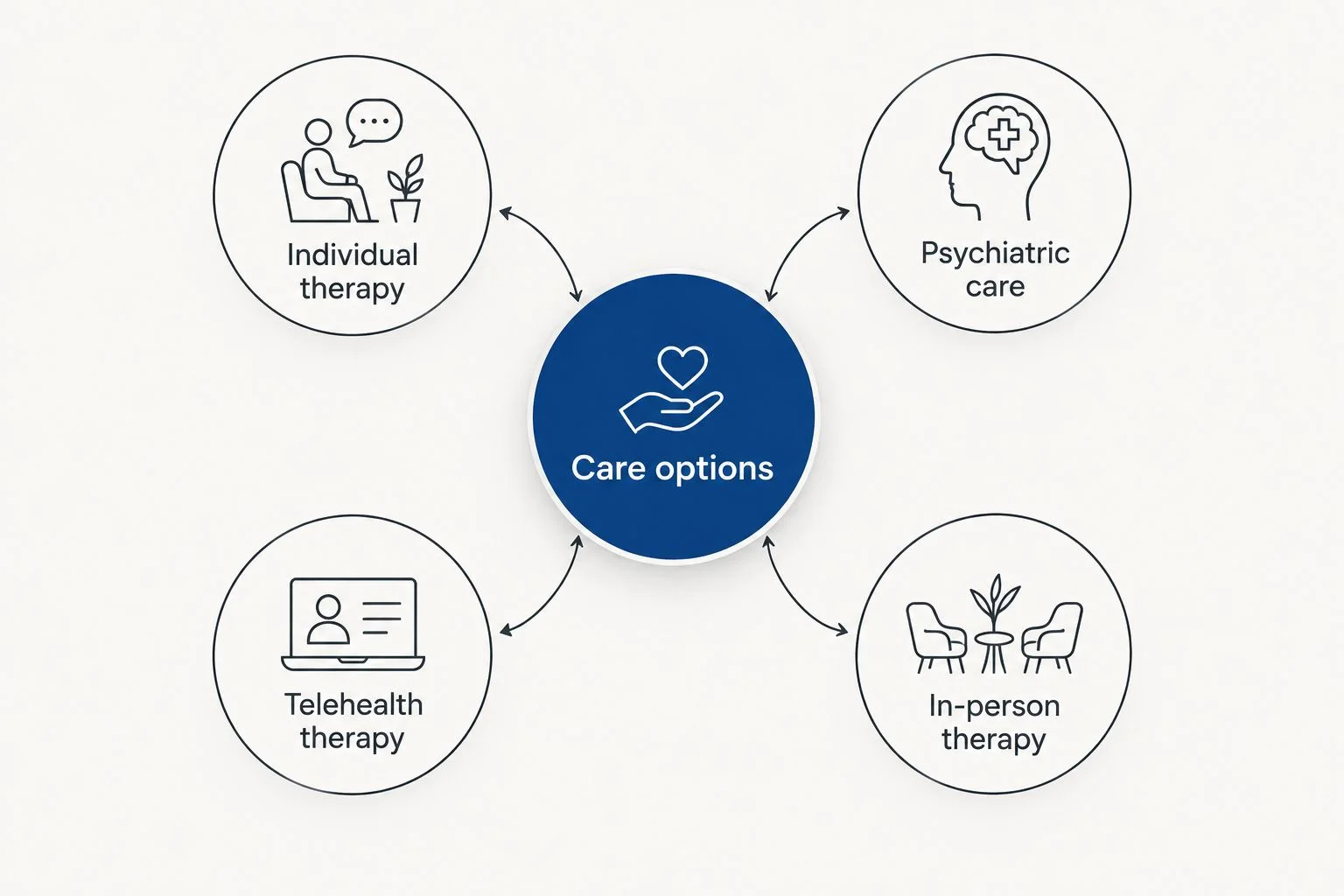
Treatment type and appointment format are separate decisions.
This guide is published by SOS Wellness, which offers therapy, psychiatric care, and Ohio telehealth. It is a guide to care types, not a ranking of providers. Confirm pregnancy and postpartum experience, care coordination, appointment availability, and whether the recommended level of care meets your needs.
Common mistakes new and expecting parents make
Waiting until distress feels serious enough
Parenthood does not make persistent distress something you must tolerate. Ask for an assessment when symptoms interfere with your life, even if you are still completing essential tasks. Being able to care for a baby does not rule out needing care yourself.
Treating every sleep problem as unavoidable
Interrupted sleep and inability to sleep are not the same. Tell your clinician whether you can rest when the opportunity exists. Also report unusually high energy or a reduced need for sleep rather than assuming you are simply managing well.
Choosing telehealth without planning for privacy
A session from home is not automatically a private session. Arrange a room, headphones, and caregiving support where possible. If someone monitors your conversations or makes you feel unsafe, discuss a safer appointment setting with your clinician.
Leaving partners outside the support plan
Partners and non-birthing parents can need their own mental health care. Discuss their concerns without assuming one person’s treatment will solve everyone’s distress. Shared responsibilities help, but relationship conversations do not replace individual treatment when it is needed.
Hiding unwanted thoughts out of shame
Unwanted intrusive thoughts are not the same as wanting or planning to act on them. Tell a qualified clinician what the thoughts involve so they can assess them properly. Thoughts accompanied by intent, a plan, inability to stay safe, or loss of contact with reality require urgent help.
FAQ
When should I start therapy as a new parent?
Start seeking therapy when distress persists, worsens, or interferes with daily life. You do not need to wait for a diagnosis or stop functioning before asking for an assessment. Seek urgent help immediately if safety is uncertain.
Can I get therapy while I am pregnant in Ohio?
Yes, therapy can address mental health concerns during pregnancy. Tell your therapist about your pregnancy and other healthcare professionals involved in your care so treatment reflects your circumstances.
Is telehealth better than in-person therapy for new parents?
Telehealth is better for removing travel barriers, while in-person therapy provides a separate treatment space. The right format depends on privacy, your symptoms, and whether you can participate consistently and safely.
How do I know whether I need therapy or medication?
A clinical assessment helps determine whether therapy, medication, or both fit your needs. Discuss pregnancy, breastfeeding, symptoms, and treatment history with the prescribing clinician; do not change medication on your own.
Can dads and non-birthing parents get postpartum support?
Yes, dads and non-birthing parents can seek therapy for distress during pregnancy and early parenthood. An individual assessment can address anxiety, mood changes, adjustment, and relationship concerns without assuming both parents need identical care.
What should I bring to my first therapy appointment?
Bring a symptom timeline, current medication list, relevant treatment history, and a practical goal for care. Include pregnancy or birth experiences you want the clinician to understand, and ask how confidentiality and follow-up work.
What should I do if I feel unsafe or lose touch with reality after childbirth?
Call 911 for immediate danger or a medical emergency, including severe confusion, hallucinations, or delusions after childbirth. Call or text 988 for suicide or mental health crisis support. Do not wait for a routine therapy appointment.
One last thing
Prepare two separate descriptions: how you feel and what has become harder to do. A clinician needs both. Constant worry describes your experience; being unable to leave the house for a medical appointment describes its impact. Bring both examples to your next conversation about care.
Further reading
Related reading
This article provides general educational information and does not replace an individual clinical assessment. Contact your healthcare provider about your own care.