

There is no single wait time for a psychiatrist appointment in Ohio; the answer depends on the practice’s current schedule and the type of evaluation you need. Ask for the earliest completed psychiatric evaluation—not just an intake call—and confirm whether paperwork, insurance verification, or a separate assessment comes first.
At a glance
- Searching psychiatrist near me? Confirm the psychiatric evaluation date, not just the first intake call.
- SOS Wellness provides Ohio outpatient psychiatry and telehealth mental health services; ask directly about scheduling.
- Compare in-person and telehealth appointments without assuming either has a shorter wait.
- Call or text 988 for a mental health crisis; call 911 for immediate danger.
How long does it take to get a psychiatrist appointment in Ohio?
Your wait is the interval between requesting care and receiving the psychiatric evaluation you need. An available introductory call does not necessarily mean an available appointment with a psychiatrist. Ask each office to identify exactly what its earliest appointment includes.
Sos-wellness provides psychiatry, therapy, medication management, addiction treatment, and telehealth mental health services in Ohio. Its service list describes types of care, not a guaranteed appointment date.
Use this sequence when you contact a practice:
- Name the appointment. Say that you want an initial psychiatric evaluation, and explain whether you specifically need a psychiatrist.
- Confirm the date. Ask for the earliest evaluation you can actually book, including any required intake beforehand.
- Check the requirements. Ask about insurance verification, referrals, forms, records, and whether anything must be completed before scheduling.
- Ask about alternatives. Check whether another clinician, another location, telehealth, or a cancellation list fits your needs.
Write down the clinician’s name and role alongside the date. That makes different offices’ answers easier to compare and prevents an intake appointment from being mistaken for a medication evaluation.
Why this matters
When you are struggling, making the first call takes effort. Learning afterward that the appointment is only an administrative intake can make the process feel even harder. Clear questions help you understand what happens next without assuming a practice has promised more than it has.
A useful booking answer includes who you will see, what the visit covers, and what must happen beforehand. A date without those details is incomplete. You also need a safe plan for symptoms or medication concerns while you wait.
Focus on an appointment that meets your clinical needs rather than the earliest date displayed in a directory. Confirm that the clinician treats your age group and provides the evaluation you need.
In-person appointments: confirm the location and clinician
Potential fit: People who prefer meeting face-to-face and can travel to the office.
An in-person appointment gives you a dedicated clinical setting without relying on your own internet connection or private room. Before booking, confirm the office address and whether the clinician you selected works at that location.
The trade-off is travel. Transportation, work, school, caregiving, and accessibility needs all affect whether you can attend an opening. Ask whether later visits must also be in person so you understand the ongoing commitment—not just the first trip.
Do not assume that the closest office has the shortest wait. Compare actual evaluation dates and appointment requirements rather than distance alone.
Telehealth appointments: confirm eligibility and privacy
Potential fit: People who can participate from a private space and want to avoid traveling to an office.
Telehealth removes the trip to the practice, but it does not establish how soon a psychiatrist can see you. Ask whether the initial psychiatric evaluation is offered remotely, whether the clinician can treat you while you are physically in Ohio, and whether your needs require an in-person assessment.
The trade-offs include technology and privacy. You need a suitable connection, a working device, and a place where you can discuss sensitive information. A shared room, unreliable connection, or difficulty using the platform can make the visit harder.
| Appointment format | Potential fit | Practical benefit | What to confirm |
|---|---|---|---|
| In-person | People who prefer face-to-face care | A dedicated clinical setting | Location, travel needs, and the actual evaluation date |
| Telehealth | People with a private space and suitable technology | No trip to the office | Ohio eligibility, initial-visit format, and clinical suitability |
Neither format automatically means a shorter wait. Compare the date and scope of the appointment before choosing the format.
Why psychiatrist appointment waits vary
Appointment timing depends on more than whether a practice accepts new patients. These factors help explain why offices give different answers:
- New-patient evaluations. A practice can have follow-up openings without having an opening for a full initial evaluation. Ask specifically about new-patient scheduling.
- Age group. Confirm that the clinician evaluates children, adolescents, or adults as appropriate. An adult appointment does not answer a parent’s question about care for a child.
- Clinical fit. Explain the main reason for seeking help. The office needs enough information to direct you to an appropriate service, especially when symptoms or treatment needs are complex.
- Insurance requirements. Network participation, referral rules, and authorization requirements depend on your plan and the service. Confirm requirements with both the practice and your insurer.
- Visit format and location. Your ability to attend in person or use telehealth changes which appointments you can consider. Neither choice guarantees an earlier evaluation.
- Intake requirements. Forms, records, or an assessment can come before the psychiatric visit. Ask which steps are required and when they must be completed.
A scheduling explanation is useful only if it leads to a next action. Before ending the call, establish whether you are booked, waiting for a callback, completing intake, or still looking elsewhere.
How can I find the right appointment without losing time?
Use the same questions with every office. You do not need to tell your entire medical history to a scheduler, but you should clearly describe the service you need and any immediate safety concerns.
Appointment date
Ask: What is the earliest initial psychiatric evaluation I can book? Follow with: Is that a visit with the treating clinician, or an intake before another appointment?
Record both dates if the practice requires separate visits. Do not compare one office’s intake date with another office’s evaluation date as though they are equivalent.
Clinician role
Ask: Will I see a psychiatrist or another mental health professional? Psychiatrists are physicians; other appropriately licensed clinicians also provide mental health treatment within their professional scope.
The right choice depends on your needs, not a directory label. If you specifically need a psychiatrist’s assessment, say so before accepting an appointment with a different clinician.
Required paperwork
Ask: What must be completed before the appointment is confirmed? Find out how to send requested records and whether the office needs information from a previous prescriber.
Keep your medication list ready. Include medication names, how you take them, and any concerns you want to discuss; do not change treatment simply to prepare for an evaluation.
Cancellation list
Ask: Can I join a cancellation list, and how will you contact me? Clarify whether you must respond promptly and whether accepting an opening changes an existing appointment.
A cancellation list is an additional possibility, not a confirmed appointment. Keep track of what is booked and what is only a request.
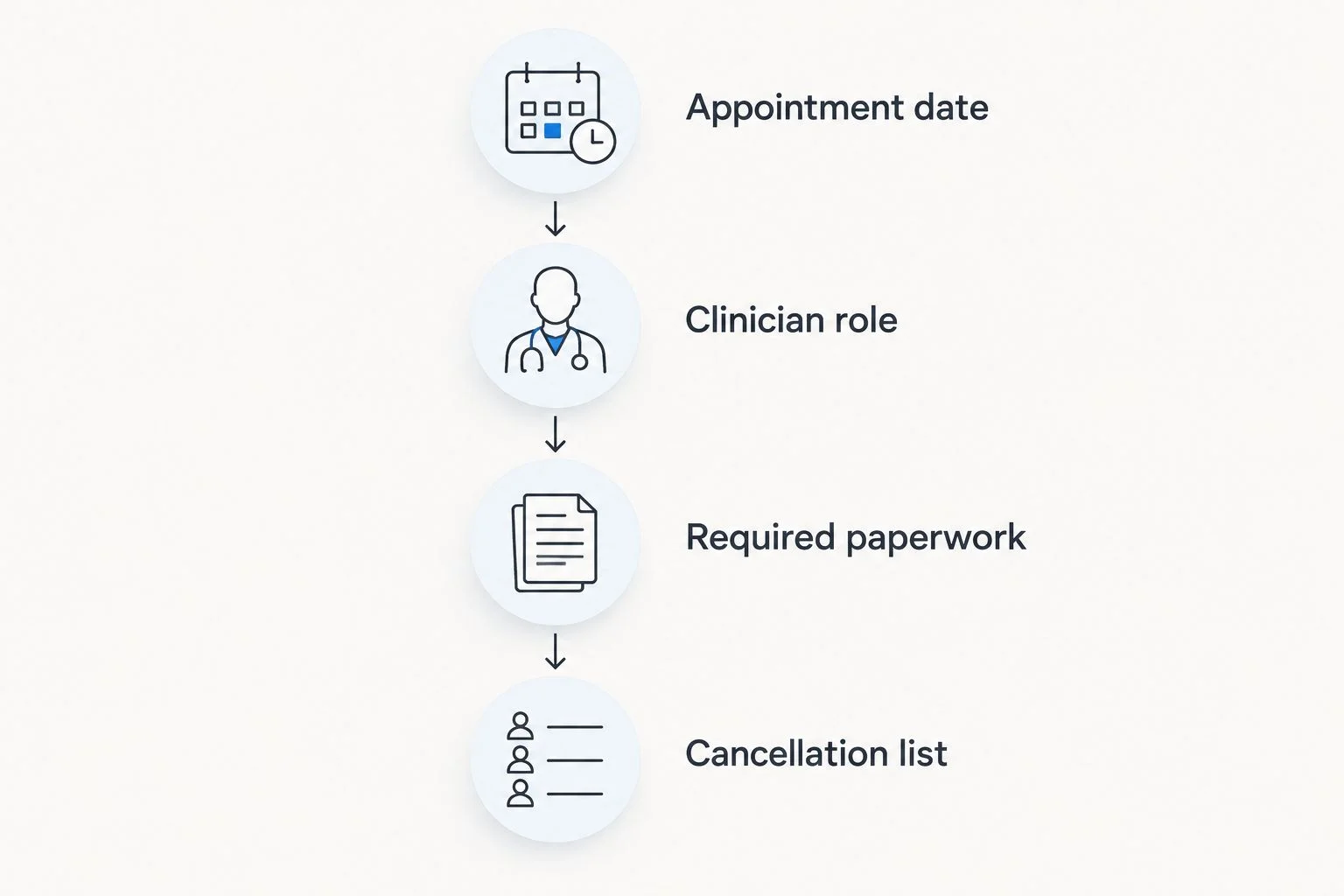
Confirm what the appointment includes before comparing dates.
What should I do while I wait for a psychiatrist?
Ask an existing treating clinician for a plan rather than changing medication yourself. If you already have a prescriber, contact that office about symptoms, side effects, or a supply concern. A new appointment request does not transfer responsibility for prescriptions to a new practice.
Your primary care clinician is another appropriate contact for an assessment and guidance about next steps. Explain what is happening and when your psychiatric appointment is scheduled. Do not assume that a clinician can provide a particular prescription or continue someone else’s treatment without evaluating you.
Prepare a short note for the eventual visit:
- The symptoms that are affecting daily life most.
- When those symptoms started and how they have changed.
- Current medications, supplements, allergies, and previous treatment.
- Changes in sleep, mood, substance use, school, work, or relationships.
- Questions and priorities you want the clinician to address.
For a child, include observations from home and school when available. Describe what you are seeing rather than trying to establish a diagnosis before the appointment.
Keep scheduling messages, appointment details, and preparation notes together. If symptoms worsen, contact a clinician again instead of assuming the original waiting plan still fits.
Can I get a psychiatrist appointment sooner through telehealth?
Telehealth broadens the appointments you can consider without traveling, but an earlier date depends on the practice’s schedule. Ask for both remote and in-person evaluation dates if either format works for you.
Also confirm where you must physically be during the visit. Tell the practice if you expect to travel outside Ohio before the appointment; do not assume a remote visit can take place from any location.
Does accepting insurance mean a psychiatrist can see me soon?
Accepting your insurance does not establish appointment timing or confirm that your particular visit is covered. Verify the clinician’s network status and your plan’s requirements, then separately ask about the evaluation date.
If an insurer provides a directory, use it as a starting point for calls rather than proof of an opening. Confirm details directly before treating a listing as a booking option.
When should I get help instead of waiting?
Do not wait for a routine appointment when there is immediate danger or an urgent safety concern. Call 911 for a life-threatening emergency, an overdose, or immediate danger. Call or text 988 for suicide concerns, a mental health crisis, or substance-use crisis support in the United States.
Seek prompt clinical guidance if symptoms are rapidly worsening, you cannot manage basic needs, or you are concerned about medication effects. Describe the specific change rather than asking only whether an earlier appointment exists.
An outpatient appointment is not emergency care. If you are unsure how to stay safe, use crisis support rather than continuing a routine search for a nearby psychiatrist.
FAQ
How do I find out how long a psychiatrist near me takes to book?
Call the practice and ask for its earliest initial psychiatric evaluation. Confirm whether that date is with the treating clinician or only an intake before another appointment.
Can I get a same-day psychiatrist appointment in Ohio?
Only the practice can confirm a same-day appointment. For immediate danger, call 911; for a mental health crisis or suicide concerns, call or text 988 rather than waiting for routine scheduling.
Is a therapy appointment the same as seeing a psychiatrist?
A therapy appointment is not automatically a psychiatric evaluation. Ask who will conduct the visit and whether it includes the assessment or medication discussion you need.
Can my child see the same psychiatrist as an adult family member?
Confirm that the psychiatrist evaluates your child’s age group before booking. Ask what parent or guardian participation and records the practice requires.
Does SOS Wellness offer mental health services in Ohio?
SOS Wellness provides Ohio psychiatry, therapy, medication management, addiction treatment, and telehealth mental health services for individuals and families, including children and adults. SOS telehealth patients must be physically in Ohio during visits. Contact the practice to confirm the appropriate service and appointment date.
Should I stop my medication before seeing a new psychiatrist?
Do not stop or change prescribed medication on your own to prepare for an appointment. Contact your current prescriber about medication questions, side effects, or a supply concern.
What should I ask before booking a psychiatrist appointment?
Confirm the evaluation date, clinician’s role, visit format, and required intake steps. Also verify insurance requirements and ask who to contact if your symptoms worsen while waiting.
One last thing
The earliest appointment and the earliest psychiatric evaluation are not always the same date. That distinction is the most useful scheduling question to carry into your next call. Ask what happens during the visit and what happens afterward.
SOS Wellness offers outpatient mental health services for Ohio individuals and families; an assessment determines the appropriate care plan. Choose care by clinical fit, a clear scheduling plan, and a safe approach to the wait—not by a search result’s position.
Further reading
Related reading
This article provides general educational information and does not replace an individual clinical assessment. Contact your healthcare provider about your own care.