

Ohio Medicaid may cover in-person intensive outpatient treatment, depending on the specific services billed and applicable coverage requirements. Coverage for your IOP depends on your eligibility, medical necessity, the provider’s participation, and any referral or authorization rules that apply. A program accepting Medicaid does not automatically mean your particular plan has approved your treatment.
At a glance
- Ohio Medicaid includes substance-use intensive outpatient treatment among its benefits; coverage for a particular program depends on eligibility, medical necessity, provider participation, and applicable plan requirements.
- For mental health IOP, ask which specific services are billed and covered rather than relying on the program label.
- Confirm the specific program and location—not just whether the practice accepts Medicaid.
- Check coverage separately for in-person and virtual IOP, including any authorization and continued-care review requirements.
Why this matters
An insurance answer should help you arrange care, not leave you guessing about the next appointment. For a coverage decision, distinguish between a covered type of treatment and approval for the particular program you want to attend.
SOS Wellness offers an in-person IOP for adults aged 18 and over at its Middletown clinic, alongside other mental health and addiction services. An assessment determines whether the program is appropriate. Staff and your Medicaid plan must confirm coverage for the specific services; requesting intake does not confirm enrollment or payment.
Does Medicaid cover in-person IOP in Ohio?
In-person IOP may be covered, but the program label alone does not establish Medicaid coverage. Ask the program and your plan to confirm the specific services being billed and the requirements that apply to you. An appointment or intake assessment alone does not establish approval for the full program.
An IOP provides structured outpatient treatment while you continue living outside a hospital or residential facility. Programs differ in their clinical focus, including mental health treatment, substance use treatment, or care addressing both.
Use this checklist to separate the coverage questions:
| Coverage check | What you need to confirm | Why it matters |
|---|---|---|
| Eligibility | Your Medicaid coverage is active for the treatment dates | Previous enrollment does not establish current eligibility |
| Program | The specific intensive outpatient service is covered | Acceptance of Medicaid for another service is not enough |
| Provider | The program and location participate in the coverage arrangement that applies to you | Participation can differ across services and locations |
| Clinical need | The assessment supports intensive outpatient treatment | A diagnosis alone does not establish the necessary level of care |
| Authorization | Any required approval is in place | A referral and an authorization serve different purposes |
| Continued treatment | The program knows when additional review is required | Initial approval does not establish unlimited treatment |
For managed care coverage, contact the member services number on your insurance card. If you receive services through traditional Medicaid rather than a managed care plan, ask Ohio Medicaid and the program which coverage and approval process applies.
Does an IOP need to accept my exact Medicaid plan?
Yes—confirm the exact coverage arrangement, not just the word Medicaid. A practice’s participation in Medicaid does not establish that every service, clinician, or treatment location is covered under your managed care plan.
Give the intake team the plan name shown on your current card. Ask them to check the in-person IOP itself, including the location where you will attend and the service they intend to bill.
Does Medicaid cover every service offered during IOP?
Coverage for IOP does not establish coverage for every separate service. Ask whether psychiatric visits, medication management, testing, or other proposed services are included in the program’s billing or handled separately.
Request an explanation before agreeing to additional services. If someone asks you to sign a financial agreement, make sure you understand what it covers and why you are being asked to sign it.
How to check in-person IOP Medicaid coverage in Ohio
For your coverage check, contact both the program and the organization administering your Medicaid benefits. Each answers a different question: the program explains its services and billing, while Medicaid or your managed care plan explains your benefits and approval requirements.
Check your plan details
Have your current Medicaid card available. Confirm that your coverage is active and identify whether you use a managed care plan or traditional Medicaid for the proposed treatment.
Ask which department handles behavioral health benefits. Record the representative’s name, the date, and any call reference number so you can follow up without starting the explanation again.
Confirm provider enrollment
Ask the program whether it participates in your exact plan for in-person intensive outpatient treatment at the location you will attend. Then ask member services to confirm the same information.
Do not substitute a general provider-directory listing for this conversation. A listing helps you identify a practice, but you still need confirmation of the specific program and service.
Complete a clinical assessment
The assessment helps a qualified clinician determine which level of care fits your symptoms, functioning, and safety needs. Describe what daily life actually looks like, including missed responsibilities, recent crises, current treatment, and any substance use concerns.
Give an accurate account rather than trying to qualify for a particular program. The purpose is to match treatment to your needs, whether that is IOP, routine outpatient care, or a more intensive setting.
Clarify authorization
Ask whether prior authorization is required and who submits the request. If the program handles it, ask when you should expect a status update and whether treatment can begin before a decision.
Also ask how continued treatment is reviewed. Keep the distinction clear: an intake appointment, a clinician’s recommendation, a submitted request, and an approval are different stages.
Request written confirmation
Ask for available written benefit information and any authorization notice. Check that the service, provider, treatment dates, and approval conditions match the care being arranged.
Written information gives you something concrete to review if questions arise. It does not replace active eligibility or the other conditions attached to coverage.
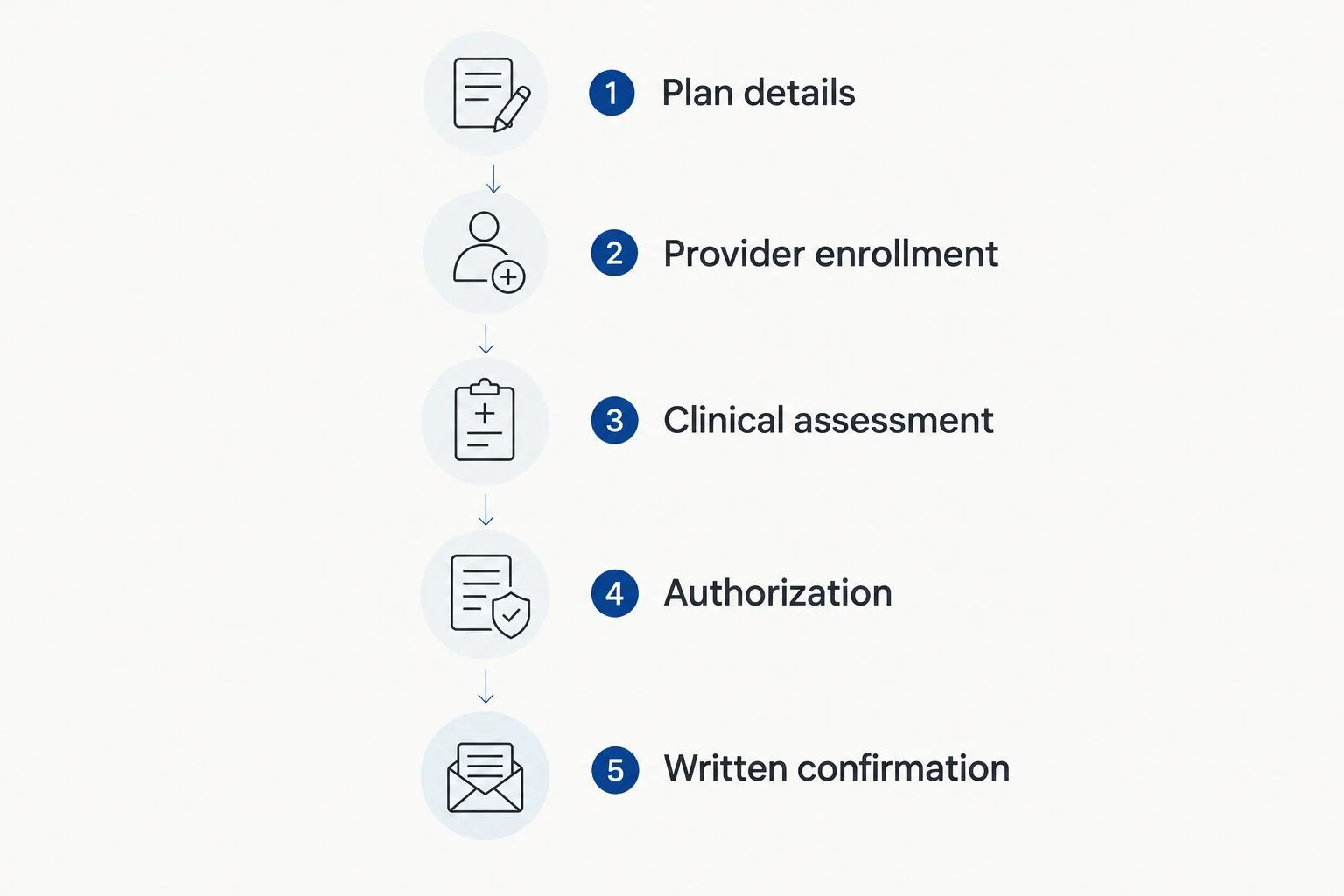
Confirm the program and approval requirements before treatment begins.
Why in-person IOP coverage decisions vary
A different coverage decision does not necessarily mean a different Medicaid benefit. The clinical situation, program, or administrative requirements can differ.
- Treatment focus: Mental health treatment and substance use treatment can involve different services and coverage requirements. Confirm what the proposed program actually provides.
- Level of care: The clinical assessment must support intensive outpatient treatment rather than a less or more intensive service.
- Provider participation: Confirm the program, location, and applicable plan rather than relying on a practice-wide statement.
- Authorization rules: Ask whether approval is required before treatment and whether additional reviews apply during care.
- Eligibility changes: A change in enrollment or plan can affect the arrangements you previously confirmed.
- Services billed separately: Ask how appointments or services outside the IOP schedule are handled.
When reviewing a member handbook, look for the behavioral health benefits, prior authorization, and appeals sections. If the wording is unclear, ask member services to explain how it applies to the exact service the program proposes.
Is in-person IOP better than virtual IOP?
In-person IOP is not automatically better than virtual IOP. The better fit depends on your clinical needs, your ability to participate, and the treatment setting—not simply which format is easier to arrange.
| Treatment option | Potential fit after assessment | Practical benefit | Limitation |
|---|---|---|---|
| In-person IOP | People whose assessed needs fit structured outpatient care and who can attend on site | Provides a shared treatment setting away from home | Requires travel and reliable attendance at the location |
| Virtual IOP | People whose assessed needs fit remote treatment and who have a private, workable setting | Removes the trip to the treatment site | Requires privacy, suitable technology, and clinical suitability; SOS patients must be physically in Ohio during visits |
| Routine outpatient care | People whose assessed needs fit less intensive support | Offers treatment without an intensive program schedule | Does not provide the same treatment intensity as IOP |
| Inpatient care | People assessed as needing hospital-level treatment | Provides treatment in a hospital setting | Is not interchangeable with outpatient treatment |
Changing formats also calls for a fresh coverage check. Approval for an in-person program does not establish approval for a virtual program, and the reverse is also true.
Tell the clinician about transportation difficulties, privacy concerns, work, school, and caregiving responsibilities. These details help shape a practical plan; they should not replace the clinical assessment of which setting is appropriate.
What should I ask before enrolling?
Use specific questions rather than asking only whether insurance is accepted. For a start date, confirm the requirements that apply to the coverage you currently hold.
- Does this location provide the type of in-person IOP recommended for me?
- Do you participate in my exact Medicaid plan for that service?
- Is a referral required, and who should provide it?
- Who requests authorization, and how will I learn the decision?
- What happens if approval is still pending on the planned start date?
- Which services are included, and which are handled separately?
- Who helps if continued treatment requires another review?
If you contact SOS Wellness about outpatient mental health care, describe the service you are seeking and the plan on your card. Ask whether the appropriate next step is an assessment there or assistance identifying a different level of care.
Discuss your outpatient care needs
Ask about services, assessment, and your exact Medicaid plan before arranging treatment.
What if Medicaid denies in-person IOP?
A denial is a decision to review, not a clinical instruction to stop seeking help. Request the written notice and identify the stated reason. Provider participation, missing documentation, and disagreement about medical necessity require different responses.
Ask the treating clinician or program to explain the next step. That might involve supplying information, correcting a request, discussing another covered provider, or pursuing the review process described in the notice.
Follow the instructions and deadlines in your own notice rather than relying on a general online timeline. If your symptoms worsen while the issue is being resolved, contact your treating clinician and ask for an interim care plan.
FAQ
Does Ohio Medicaid cover in-person IOP for mental health?
Ohio Medicaid may cover services provided through an in-person mental health IOP. Ask the program and your plan to confirm the specific covered services, medical necessity requirements, provider participation, and any required authorization.
Can I start IOP before Medicaid approves it?
Ask the program and your Medicaid plan before starting if authorization is required. An assessment or submitted request is not the same as approval for treatment.
Do I need a referral for an Ohio Medicaid IOP?
Referral requirements depend on the program and the coverage rules that apply to you. Ask the intake team and member services whether you need a referral, authorization, or both.
Does approval for virtual IOP also cover in-person IOP?
Approval for virtual IOP does not automatically establish coverage for in-person IOP. Confirm the program, location, service, and authorization requirements before changing formats.
How long will Medicaid cover my IOP treatment?
Covered treatment length depends on medical necessity and the applicable approval requirements. Ask what the current authorization covers and who requests continued treatment when needed.
Does SOS Wellness accept my Medicaid plan for in-person IOP?
SOS Wellness accepts Ohio Medicaid, including managed care plans, and offers in-person IOP for adults. Acceptance does not guarantee coverage for your IOP services. Call 513-928-3339 and contact your plan to verify the exact program, provider network, benefits, and any authorization requirements before enrolling.
What if I need urgent help before an IOP starts?
Call 911 for immediate danger or a medical emergency. In the United States, call or text 988 for suicide or mental health crisis support; do not wait for an IOP coverage decision to seek help.
One last thing
Ask who owns the next step. Before ending a coverage call, identify who will submit the request, who will contact you, and what you should do if you do not hear back. That turns an insurance conversation into an actionable care plan.
Keep your current coverage details and any approval information together. Bring them to intake alongside your medication list and any relevant treatment records.
Further reading
Related reading
This article provides general educational information and does not replace an individual clinical assessment. Contact your healthcare provider about your own care.