

Telehealth may help with assessment and follow-up during a mental health crisis in Ohio when you can remain safe and a clinician determines that remote care is appropriate. It does not replace emergency care or guarantee immediate access to a clinician. Call 911 for immediate danger or a medical emergency; call or text 988 for suicide-related concerns or emotional distress, rather than waiting for an outpatient video appointment.
At a glance
- Telehealth can support crisis assessment and follow-up, but cannot provide emergency medical treatment.
- Call 911 for immediate danger, a suspected overdose, or another medical emergency.
- Call or text 988 for suicide-related concerns, emotional distress, and help identifying next steps.
- Outpatient telehealth may be appropriate when you can stay safe, participate in a clinical conversation, and a clinician determines that remote care fits your needs.
Can telehealth help during a mental health crisis in Ohio?
Telehealth can help you talk through symptoms, assess safety, and plan treatment. It cannot provide hands-on emergency care. The right starting point depends on what is happening now—not simply whether you prefer an online appointment.
For nonemergency follow-up, SOS Wellness provides outpatient mental health services in Ohio, including telehealth. A routine appointment is a different service from an emergency response or a crisis line.
| Support option | Potential fit | What it offers | Main limitation |
|---|---|---|---|
| 911 and emergency care | Immediate danger or a medical emergency | Emergency response and access to in-person medical assessment | Not a substitute for ongoing outpatient treatment |
| 988 Suicide & Crisis Lifeline | Suicide-related concerns, emotional distress, or concern about someone else | A live conversation about safety and next steps | Cannot provide hands-on medical treatment |
| Outpatient telehealth | Assessment and treatment when you can remain safe | Clinical discussion, treatment planning, and follow-up | Cannot physically examine you or make your surroundings safe |
These options serve different purposes. You do not need to decide on a diagnosis before asking for help, and you do not need an outpatient provider’s permission to contact emergency services.
Why this matters
A crisis does not always look dramatic. You might feel overwhelmed, frightened by your thoughts, unable to manage familiar responsibilities, or unsure whether you can get through the day safely.
The important distinction is whether you need immediate protection or medical treatment, a crisis conversation, or an outpatient assessment. Choose support by the level of danger, not by the convenience of the appointment.
For Ohio residents seeking help, SAMHSA’s national 988 guidance provides a clear starting point: the Lifeline supports people experiencing suicidal thoughts, mental health or substance use crises, and emotional distress. You can also contact it because you are worried about someone else.
When should you call 911 instead of using telehealth?
Call 911 when someone faces immediate danger or needs emergency medical care. Do not wait for a video visit, an email reply, or a patient-portal message.
Examples include:
- A suicide attempt, serious injury, or suspected overdose.
- Trouble breathing, unconsciousness, or another urgent physical symptom.
- An immediate threat of serious harm to yourself or another person.
- A situation in which you cannot keep yourself or someone else safe.
For severe confusion, agitation, or loss of contact with reality, seek prompt professional assessment rather than relying on a routine video appointment. Call 911 if there is immediate danger, a medical emergency, or you cannot maintain safety; otherwise, 988 can help you discuss next steps. If calling 911, describe what you observe, the person's location, and any injuries or immediate hazards.
Do not assume that symptoms are only anxiety because you have experienced panic before. New or severe physical symptoms deserve medical assessment; a routine video conversation cannot rule out every physical emergency.
If you are supporting someone, stay nearby when it is safe to do so. Do not put yourself at risk or physically confront someone who is threatening violence.
When should you contact 988?
Call or text 988 when you need crisis support, including when you are unsure how serious the situation is. You do not have to be actively attempting suicide to reach out.
The 988 Suicide & Crisis Lifeline operates 24 hours a day, 7 days a week, according to SAMHSA. It gives you a place to describe what is happening and discuss safety and available support.
You can begin with plain language: you feel unsafe, you are having thoughts about suicide, or you are worried about a family member. You do not need clinical terms or a prepared explanation.
A crisis conversation is not the same as a scheduled therapy session. Its immediate purpose is to address the situation in front of you and identify appropriate next steps, rather than complete a full course of treatment.
Do not assume that a phone automatically supplies your exact location. Share where you are when location matters, especially if emergency help is needed.
What can an outpatient telehealth appointment do?
An outpatient clinician can ask about your symptoms, daily functioning, medications, substance use, support system, and thoughts of harming yourself or others. Those answers help determine whether outpatient treatment is appropriate or whether you need an in-person evaluation.
Telehealth also creates space to discuss what happened before the crisis, what makes symptoms worse, and which supports are available afterward. That conversation can inform therapy, medication management, or a referral to another level of care.
SOS Wellness offers outpatient mental health care for Ohio children, teens and adults; it does not provide emergency or after-hours crisis care. Services include psychiatric evaluations, therapy, medication management and addiction recovery. Patients must be physically in Ohio for SOS telehealth visits. Staff can confirm whether the requested service and clinician offer telehealth appropriate to the person's age and assessed needs.
The benefit is access to a clinical conversation without traveling to the appointment. The limitation is physical distance: a clinician cannot perform a hands-on examination, remove a hazard from your room, or guarantee your safety through a screen.
Before booking, explain that the concern involves a recent or current crisis. Ask whether the appointment is appropriate for your situation and what you should do if symptoms worsen before it begins.
Why the right level of support varies
Two people describing a mental health crisis can need very different responses. A clinician considers the circumstances, not just the name of a condition.
- Immediate safety: Intent to act on harmful thoughts, access to dangerous items, and the ability to remain safe affect the urgency of the response.
- Physical symptoms: Injury, overdose, breathing problems, or severe confusion require attention beyond a routine outpatient conversation.
- Ability to participate: Telehealth depends on being able to communicate, understand questions, and engage in the assessment.
- Surroundings: Privacy, a reliable connection, and a safe place to talk affect whether a remote visit is workable.
- Available support: A trusted person nearby can help with communication and practical arrangements, but cannot replace necessary emergency care.
No single factor proves that remote care is enough. Tell the clinician about the full situation, including anything you are reluctant to mention because you fear being judged.
How should you prepare for an urgent telehealth conversation?
If you can stay safe while seeking outpatient help, preparation makes the conversation more useful. Do not delay emergency support to complete this list.
- Share your location. Give the clinician your current physical address, not just the address on your account. Explain whether you are alone.
- Check your connection. Confirm that your device works and agree on what happens if the call drops. Keep a callback number available.
- Describe the concern. Start with what changed, how it affects you, and whether you have thoughts of harming yourself or someone else.
- List your medications. Include prescriptions, nonprescription products, alcohol, and other substances. Describe recent changes without guessing at the cause.
- Confirm next steps. Before ending, clarify the recommended level of care, whom to contact, and what to do if safety changes.
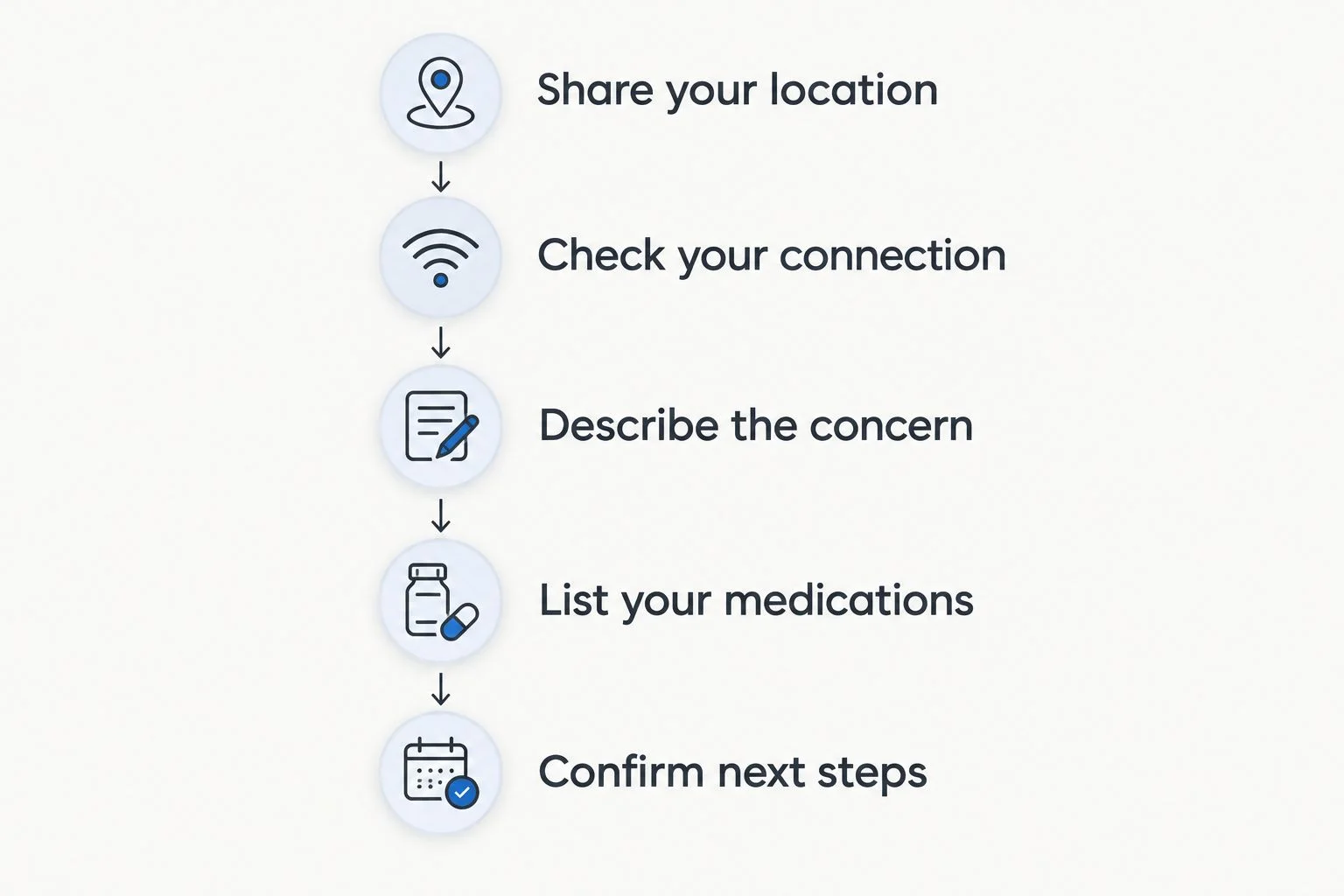
Preparation supports the conversation, but must not delay emergency help.
Before a telehealth visit, ask about the provider’s crisis procedures and agree on a backup plan if the connection drops. Do not assume a portal message or voicemail receives an immediate response.
Write the plan somewhere you can find it when distressed. A plan that exists only in memory is harder to follow when concentration is poor.
Can a parent use telehealth during a child’s crisis?
A parent can use telehealth to seek assessment and guidance when the child can remain safe. Immediate danger, a suspected overdose, or a serious injury requires emergency help instead.
Tell the clinician what you have directly observed: changes in sleep, statements about death, withdrawal, agitation, substance use, or difficulty functioning. Distinguish what the child said from your interpretation of it.
Ask the clinician how caregiver input will be included, whether a private conversation with the child is appropriate, and what consent and confidentiality rules or safety-related exceptions apply.
You can contact 988 about a child or teenager even if they do not want to make the call themselves. If you cannot maintain safety, call 911 rather than trying to persuade them to finish a video appointment.
Can telehealth help after the immediate crisis passes?
Telehealth can support follow-up after a crisis when outpatient care is clinically appropriate. Feeling calmer does not remove the need to address what led to the episode.
Follow-up can include reviewing discharge instructions, discussing symptoms, coordinating therapy, and reviewing medication concerns with the prescriber. Follow your discharge and medication instructions, and contact your prescriber before making changes because you feel better or an appointment is delayed. If you suspect a serious medication reaction or overdose, seek emergency medical help rather than waiting for the prescriber.
For a follow-up plan, ask for clear answers to these questions:
- Who is responsible for the next appointment?
- What should you do if symptoms return before then?
- Which warning signs mean you should seek emergency help?
- Who can help you carry out the plan safely?
SOS Wellness provides outpatient services relevant to this stage, including therapy, psychiatry, and medication management. Ask whether telehealth fits your current needs; the presence of a virtual service does not establish that every crisis can be managed remotely.
FAQ
Can I use telehealth if I am having suicidal thoughts?
Telehealth can be part of care for suicidal thoughts, but a routine appointment is not emergency support. Call or text 988 for crisis support; call 911 if you are in immediate danger, have attempted suicide, or cannot stay safe.
Is 988 available all night in Ohio?
988 is available 24 hours a day, 7 days a week in Ohio through the national Suicide & Crisis Lifeline. Call or text when you need support for suicidal thoughts, emotional distress, or concern about someone else.
Should I call 911 or 988 for a mental health crisis?
Call 911 for immediate danger or a medical emergency; call or text 988 for crisis support and help discussing next steps. A suspected overdose, serious injury, or inability to stay safe should not wait for an outpatient appointment.
Can I contact 988 about someone else?
Yes, you can contact 988 because you are worried about someone else. Describe what you have observed and whether there is an immediate safety concern; call 911 for immediate danger.
Can a telehealth clinician prescribe medication during a crisis?
Prescribing depends on the clinician’s assessment, applicable rules, and whether outpatient care is appropriate. Do not rely on a virtual appointment as a guarantee of a prescription or a substitute for emergency treatment.
Does SOS Wellness provide emergency mental health response?
No. SOS Wellness does not provide emergency or after-hours crisis services. Call 911 for immediate danger or a medical emergency, or call or text 988 for crisis support. Appointment requests, voicemail and portal messages are not substitutes for urgent help.
What if my video appointment disconnects while I feel unsafe?
Call 911 if you are in immediate danger, or call or text 988 for crisis support. For nonemergency disconnections, follow the callback plan agreed with your clinician rather than assuming they can locate you automatically.
One last thing
You do not have to prove that your distress is serious enough before contacting 988. Uncertainty is a reason to ask for help, not a reason to wait alone.
The next step depends on your situation now: call 911 for immediate danger or a medical emergency, contact 988 for crisis support, and discuss outpatient follow-up when it is clinically appropriate. Choose telehealth based on your assessed needs, safety, privacy, and ability to participate—not convenience alone.
Further reading
Related reading
This article provides general educational information and does not replace an individual clinical assessment. Contact your healthcare provider about your own care.